
AI-era Redirect Handling: Managing URL Changes for Language Models
When you change a URL, search engines eventually update their indexes. In the AI era, the stakes are higher. Language models build persistent entity...

Dilshad Akhtar
Published: 23 July 2026
5 min read
TL;DRAI summary
- When you change a URL, search engines eventually update their indexes.
- AI crawlers follow HTTP redirects, but their behavior differs from search crawlers in important ways: Google-Extended follows 301 and 302...
- Every redirect hop introduces risk.
- JavaScript-based redirects window.location, history.pushState are invisible to AI crawlers that do not execute JavaScript.
- Minimize hop count.
- When migrating content to new URLs, follow this process: Implement 301 redirects from old URLs to new URLs before removing the old content.
- Redirect management is critical for maintaining AI visibility during URL changes.
When you change a URL, search engines eventually update their indexes. In the AI era, the stakes are higher. Language models build persistent entity representations associated with URLs. Changing a URL disrupts this entity recognition. The AI model must rediscover the content at its new...
The Entity Recognition Problem

When you change a URL, search engines eventually update their indexes. In the AI era, the stakes are higher. Language models build persistent entity representations associated with URLs. Changing a URL disrupts this entity recognition. The AI model must rediscover the content at its new location, rebuild the entity association, and potentially lose the accumulated authority of the original URL.
How AI Crawlers Handle Redirects

AI crawlers follow HTTP redirects, but their behavior differs from search crawlers in important ways:
Google-Extended follows 301 (permanent) and 302 (temporary) redirects, similar to Googlebot. It respects redirect chains up to 10 hops. After 10 hops, it stops following and treats the URL as unreachable. Google-Extended updates its index to the final destination URL for 301 redirects but maintains the original URL for 302 redirects.
OpenAI crawlers follow redirects more conservatively. Testing in 2025 shows that GPTBot and ChatGPT-User follow a maximum of 3-5 redirect hops. Longer chains result in the crawler abandoning the URL. OpenAI's crawlers process 301 redirects as permanent signals and update their content references accordingly.
Claude-Web follows redirects with similar constraints. Anthropic's documentation indicates that Claude-Web processes 301 redirects but may not follow redirect chains longer than 3 hops. Complex redirect configurations risk content invisibility on Claude.
PerplexityBot follows redirects using its headless browser engine, which handles client-side redirects (meta refresh, JavaScript-based redirects) as well as HTTP redirects. However, PerplexityBot also has hop limits and timeout constraints.
Redirect Chain Risks
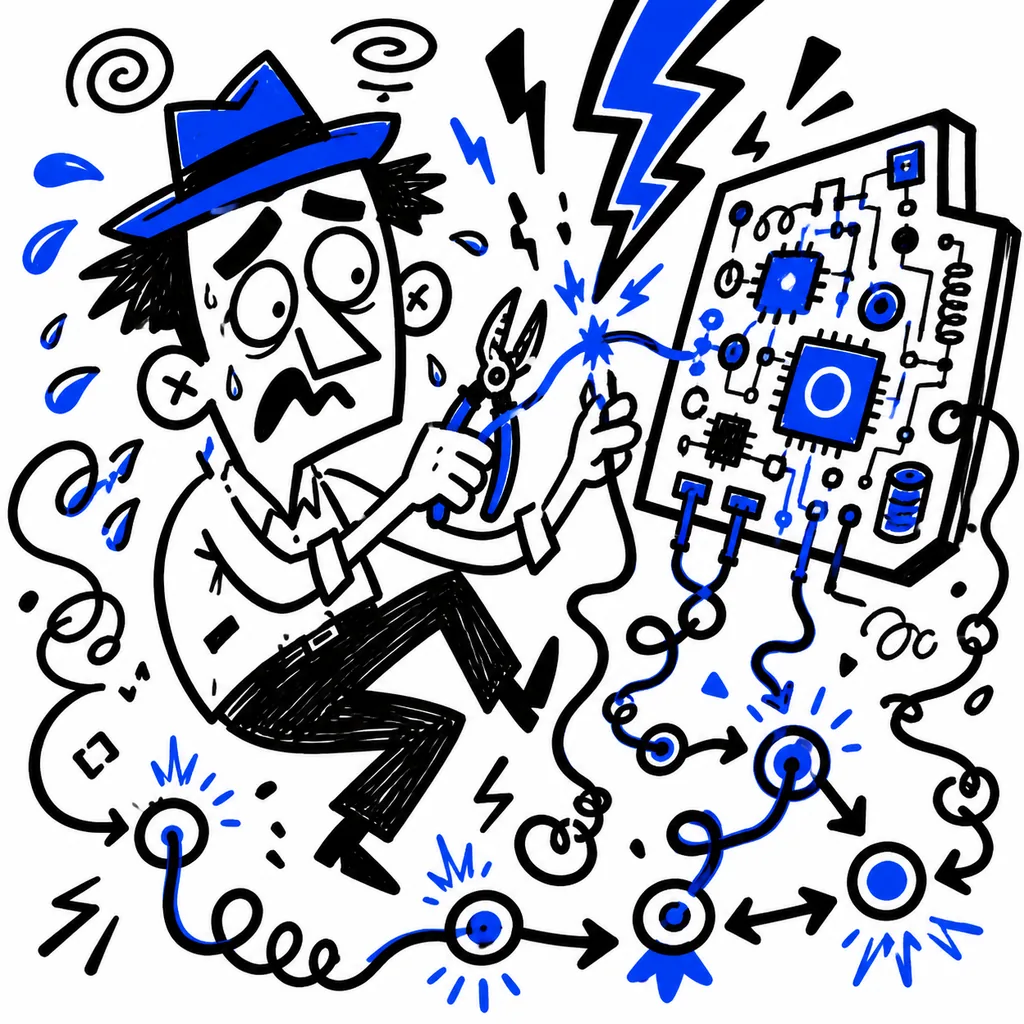
Every redirect hop introduces risk. The chain must be traversed sequentially. If any hop fails (server error, timeout), the entire chain breaks. AI crawlers with limited hop budgets will terminate the chain early.
Common redirect chain scenarios that harm AI visibility:
Protocol changes (http to https) followed by domain changes (olddomain.com to newdomain.com) followed by path changes create 2-3 hop chains that most crawlers can handle. Adding a trailing slash redirect (example.com/page to example.com/page/) extends the chain unnecessarily.
WWW normalization (example.com to www.example.com) combined with other redirects creates chains that consume crawler hop budgets. Implement www canonicalization as a single server-level rule rather than a redirect chain.
Country/subdomain redirects (example.com to us.example.com) based on geolocation create unpredictable redirect chains. AI crawlers may be served different destinations based on their IP location, creating inconsistent entity references.
Client-Side Redirect Hazards
JavaScript-based redirects (window.location, history.pushState) are invisible to AI crawlers that do not execute JavaScript. If your URL migration depends on client-side redirects, AI crawlers will see the original URL with no redirect instruction.
Meta refresh redirects () are processed by some AI crawlers but with lower reliability than HTTP redirects. Google-Extended supports meta refresh. OpenAI and Anthropic crawlers may not.
The safest approach is to implement all redirects as HTTP 301 responses at the server or CDN level before any HTML is generated.
Redirect Best Practices for AI Crawlers
Minimize hop count. Every URL should resolve to its final destination in at most 2 hops. The first hop handles protocol or domain normalization. The second hop handles path-level changes. Use direct redirects whenever possible.
Use 301 for permanent moves. AI crawlers treat 301 as a strong signal to update their entity references. 302 redirects are treated as temporary, and the crawler will continue to associate content with the original URL.
Avoid redirect chains that include non-200 intermediate responses. If a URL in the chain returns an error (500, 503), the crawler stops following and may mark the original URL as broken.
Implement redirects at the server level. Nginx, Apache, CDN edge rules, and serverless functions can execute redirects without generating full page responses. Server-level redirects are faster and more reliable than application-level redirects.
Log and monitor redirect activity for AI crawlers. Track 301 delivery to AI crawler user agents. Monitor for chains exceeding 2 hops.
Migrating Content Without Losing AI Entity Recognition
When migrating content to new URLs, follow this process:
Implement 301 redirects from old URLs to new URLs before removing the old content. Maintain the redirects indefinitely. AI models may reference your old URLs for years after the migration.
Submit new URLs to search engines through XML sitemaps. Include both old and new URLs in sitemaps during the transition period. Update internal links to point to new URLs while keeping redirects for external links.
Monitor AI crawler traffic to old URLs. A gradual decline in old URL requests and corresponding increase in new URL requests indicates successful entity transfer. If old URL traffic persists, the redirect may not be functioning correctly for specific crawlers.
Audit Closing
Redirect management is critical for maintaining AI visibility during URL changes. Audit your redirect configuration for chain length, hop count, and server-level implementation. Test redirect resolution for each major AI crawler user agent. Minimize chains to 2 hops maximum. Use 301 redirects for permanent moves. Monitor AI crawler traffic patterns during migrations. Include redirect health in your quarterly technical SEO audits.
References:
- Google Search Central. "Redirects and Google-Extended Crawler Behavior." 2025. https://developers.google.com/search/docs/crawling-indexing/redirects
- OpenAI. "GPTBot Redirect Handling and URL Processing." 2025. https://platform.openai.com/docs/gptbot/redirects
- Moz. "Redirect Chains and SEO Impact in the AI Era." 2025. https://moz.com/blog/redirect-chains-ai-seo
- Ahrefs. "301 Redirects: Best Practices for Search and AI Crawlers." 2025. https://ahrefs.com/blog/301-redirects/
Related Articles
Discover more insights about web development and digital marketing