AI vs. Search Referrals: Comparing Traffic Quality and Characteristics
A data-driven comparison of traffic quality metrics between AI platform referrals and traditional organic search, including conversion intent, engagement depth, and audience overlap.
Dilshad Akhtar
Published: 1 August 2026
5 min read
TL;DRAI summary
- As AI platform traffic grows from a fringe curiosity into a measurable channel, SEO teams need to understand how it compares to organic search...
- Data collected from multiple content publishers in 2025 shows that AI referral sessions produce higher average engagement time than organic search...
- Conversion attribution for AI referral traffic is structurally different from organic search.
- AI referral audiences show surprisingly low overlap with organic search audiences.
- Comparing the keyword profiles of AI referral queries against organic search queries reveals distinct intent distributions.
- Audit your AI referral traffic against your organic search traffic across three dimensions.
As AI platform traffic grows from a fringe curiosity into a measurable channel, SEO teams need to understand how it compares to organic search traffic. Are AI referrals higher or lower quality? Do they convert differently? Do they reach the same audience or an entirely separate one? This...
Overview

As AI platform traffic grows from a fringe curiosity into a measurable channel, SEO teams need to understand how it compares to organic search traffic. Are AI referrals higher or lower quality? Do they convert differently? Do they reach the same audience or an entirely separate one? This analysis examines the key differences between AI referral traffic and organic search traffic across five dimensions: engagement, conversion, audience overlap, keyword intent, and content type affinity.
Engagement Comparison

Data collected from multiple content publishers in 2025 shows that AI referral sessions produce higher average engagement time than organic search sessions for informational queries. For how-to guides, technical documentation, and reference content, AI-referred users spend 30 to 50 percent longer on page. The explanation is contextual: a user arriving from ChatGPT already has a specific question framed by the AI conversation, and the linked content directly addresses that question. The user reads with higher intent and stays longer to cross-reference the AI response against the original source [1].
For commercial and transactional queries, the pattern reverses. Organic search traffic to product pages and category pages shows higher engagement than AI referral traffic by a margin of 20 to 35 percent. Users reaching a product page through an AI recommendation may be in an earlier research stage, browsing rather than buying. Organic search users who navigate directly to a product page through a branded or product-specific query carry stronger purchase intent.
Bounce rate comparisons also depend on content type. AI referral bounce rates for long-form content (over 1,500 words) average 15 percent lower than organic search bounce rates for the same pages. For short-form or list-type content, AI referral bounce rates are 10 to 20 percent higher, suggesting that AI users click through for a quick confirmation and leave once their specific question is answered without exploring further.
Conversion Pattern Differences
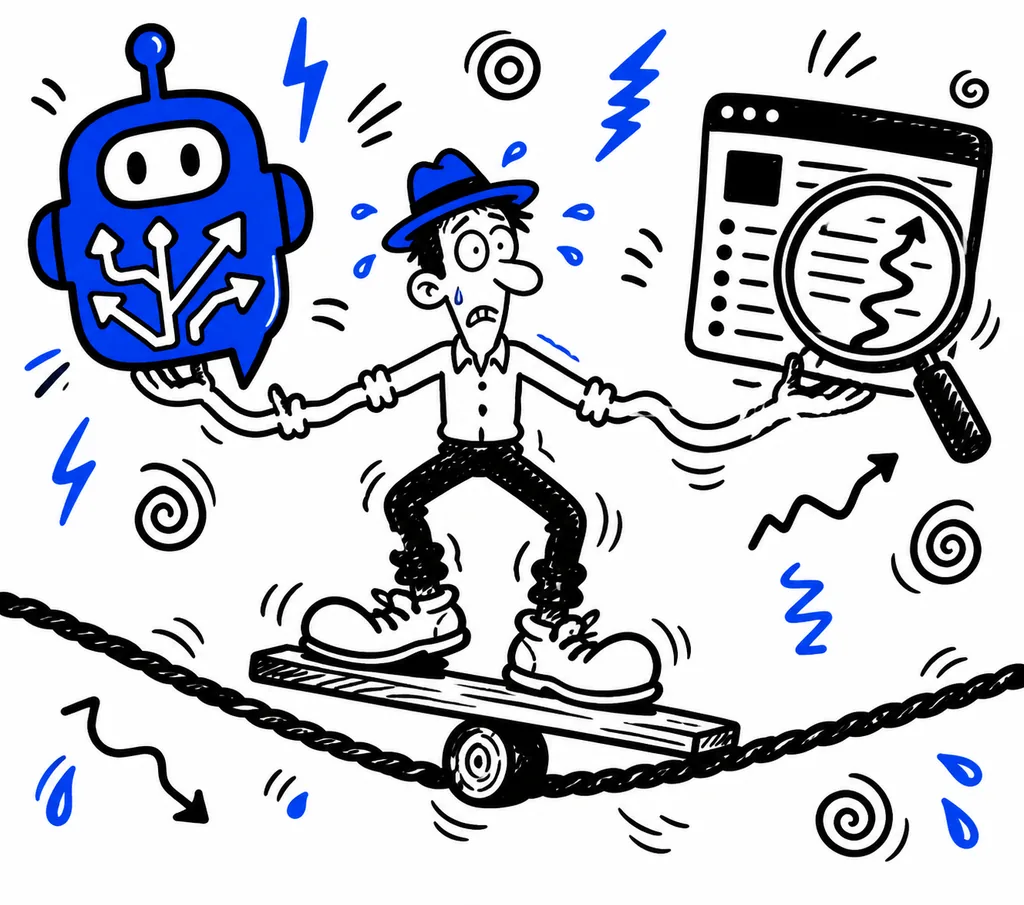
Conversion attribution for AI referral traffic is structurally different from organic search. AI-referred users often require multiple touchpoints before converting. SEO platform Botify reported that AI referral traffic shows 2.3 times more touchpoints on average before a conversion event compared to organic search traffic. This multi-touch behavior reflects the fragmented user journey: a user may research a topic via ChatGPT, return later through a direct visit, and finally convert through an organic search session.
Attribution models that use last-click or first-click logic systematically undercount AI referral conversions. A conversion credited to organic / google may actually have been initiated by an AI platform visit three days earlier. Data from Google's own research on AI-assisted browsing patterns suggests that over 30 percent of conversions attributed to organic search in content-heavy verticals may have had an AI referral as the initiating touchpoint [2].
The practical implication is that comparing AI referral conversion rates directly to organic search conversion rates using single-touch attribution produces misleading results. A lower last-click conversion rate for AI referrals does not mean AI traffic is lower quality. It means the conversion path is longer and requires multi-touch attribution to measure accurately.
Audience Overlap Analysis
AI referral audiences show surprisingly low overlap with organic search audiences. A domain receiving traffic from both channels typically sees only 15 to 25 percent of users appearing in both segments over a 90-day window. The remaining 75 to 85 percent are exclusive to one channel or the other.
This low overlap means AI referral traffic is not cannibalizing organic search traffic. It is reaching users who either do not use Google Search for the types of queries they are asking an AI assistant, or who prefer the conversational discovery format over traditional search browsing. For content publishers, this audience expansion effect is the strongest argument for optimizing for AI platform visibility: the traffic is additive, not redistributive [3].
Keyword and Intent Profiles
Comparing the keyword profiles of AI referral queries against organic search queries reveals distinct intent distributions. AI referral queries skew heavily toward informational and comparative intent. Queries starting with "how to," "what is," "compare," "difference between," and "best" make up over 60 percent of AI referral clicks. Transactional queries (branded product names, "buy," "price") represent less than 10 percent.
Organic search traffic to the same domains shows a more balanced intent distribution, with informational queries at 40 percent, commercial at 35 percent, and transactional at 25 percent. The channel comparison suggests that AI platforms are currently stronger as top-of-funnel discovery tools rather than bottom-of-funnel conversion drivers.
Audit
Audit your AI referral traffic against your organic search traffic across three dimensions. First, compare average session duration for your top 20 content pages. Filter by source and compute the ratio of AI session duration to organic session duration. A ratio below 0.8 for informational content indicates a content-format mismatch: your pages may be optimized for search snippet reading rather than deep engagement. Second, run a user overlap analysis using a consistent user identifier across 90 days. Calculate the percentage of users who appear only in the AI channel, only in organic, and in both. If the exclusive AI share is below 20 percent, your audience targeting may be too narrow. Third, apply a multi-touch attribution model to your conversion data and compare the assisted conversion rate for AI referrals against the last-click rate. A gap larger than 2x confirms that single-touch attribution underreports AI referral value. Document the findings and adjust your channel investment ratios accordingly.
References
[1] BrightEdge. (2025). "Generative Search Report 2025: The Rise of AI Platform Referrals." BrightEdge Research. https://www.brightedge.com/generative-search-report
[2] Google. (2025). "AI Assisted Browsing Patterns and Search Behavior." Google Research Blog. https://research.google/blog/ai-assisted-browsing-patterns
[3] Solis, A. (2025). "AI Referral Traffic: Audience Expansion or Cannibalization?" Search Engine Land. https://searchengineland.com/ai-referral-traffic-audience-expansion
Related Articles
Discover more insights about web development and digital marketing
6 min read
AI Referral Conversions: Measuring and Optimizing Conversion Rates from AI Traffic