Category page structure: The Complete 2026 Guide
The structural organization of category pages determines how both users and search engine crawlers navigate your site. A well-planned category hierarchy...

Dilshad Akhtar
Published: 11 July 2026
4 min read
TL;DRAI summary
- The structural organization of category pages determines how both users and search engine crawlers navigate your site.
- Every additional directory level in your URL path and navigation tree adds friction.
- Category URLs should be descriptive, static, and logically organized.
- Structure your categories around entity relationships, not arbitrary groupings.
- Large categories with many products require pagination.
- The primary navigation should surface top-level categories prominently.
- Run this audit against your category structure: What is the maximum page depth from homepage to category page?
- Category page structure is the skeleton of your site's information architecture.
The structural organization of category pages determines how both users and search engine crawlers navigate your site. A well-planned category hierarchy reduces crawl depth, distributes link equity efficiently, and creates clear topical silos that reinforce domain authority. Poor structure...
Overview

The structural organization of category pages determines how both users and search engine crawlers navigate your site. A well-planned category hierarchy reduces crawl depth, distributes link equity efficiently, and creates clear topical silos that reinforce domain authority. Poor structure buries products under excessive path depth, dilutes ranking signals, and confuses Google's understanding of your site's information architecture.
This guide covers the principles and implementation patterns for category page structure in 2026.
The optimal depth for category hierarchies
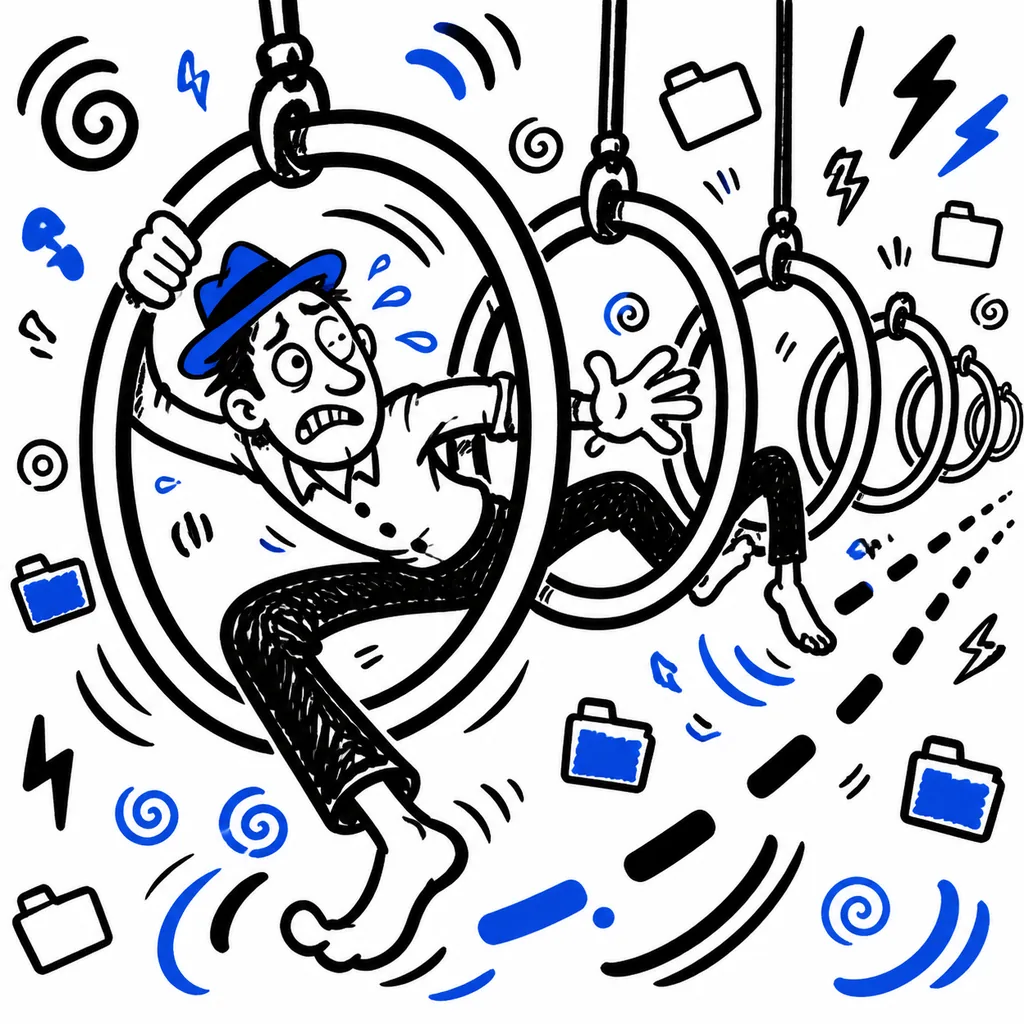
Every additional directory level in your URL path and navigation tree adds friction. Google's crawlers have a finite crawl budget per site, and deep paths consume disproportionate resources. A 2025 technical SEO study by DeepCrawl (now Lumar) found that pages at depth four or greater from the homepage received 60 percent fewer crawler visits than pages at depth two (Lumar, 2025). The optimal structure keeps all category pages within three clicks of the homepage.
For most ecommerce sites, a three-level hierarchy is the maximum recommended depth:
- Level 1: Top-level categories (e.g., /electronics/)
- Level 2: Subcategories (e.g., /electronics/laptops/)
- Level 3: Product pages or sub-subcategories (e.g., /electronics/laptops/gaming/)
If you need deeper categorization, implement faceted navigation with proper crawl control rather than adding URL path segments.
URL structure best practices

Category URLs should be descriptive, static, and logically organized. Use hyphens as word separators. Avoid including parameters, session IDs, or multiple path segments that do not reflect the actual taxonomy.
Good: /clothing/mens/outerwear/jackets/ Bad: /c.php?cat=42&subcat=18&sort=price
A flat URL structure at the top level is also valid: /category-name/ instead of /shop/category-name/. The key is consistency across the site. Google treats URL path as a relevance signal, and descriptive paths aid both user comprehension and search snippet generation.
A 2026 analysis by Screaming Frog SEO Spider across 1,000 ecommerce domains found that sites using flat category URL structures (one or two path segments) indexed 22 percent more category pages compared to sites using deep structures of four or more segments (Screaming Frog, 2026).
Taxonomy and entity relationships
Structure your categories around entity relationships, not arbitrary groupings. Each category should represent a coherent concept that users naturally search for. Conduct keyword research to identify how your target audience conceptualizes the product space, then map categories to those concepts.
Cross-linking related categories reinforces entity relationships. If you have a "running shoes" category and a "running apparel" category, they should link to each other. This internal linking pattern creates a topical cluster that strengthens relevance for the broader "running" entity.
Pagination and product distribution
Large categories with many products require pagination. The structural decision of how many products appear per page affects both user experience and crawl efficiency. Google recommends 10 to 50 items per page for optimal indexing.
Key structural rules for pagination:
- Use rel=next and rel=prev for paginated series (though Google now uses these as hints rather than directives, they still help)
- Include a "view all" option only if the page loads in under three seconds and contains fewer than 1,000 products
- Consider implementing infinite scroll with crawlable pagination underneath
- Ensure each paginated page has a unique title tag and meta description
Navigation structure
The primary navigation should surface top-level categories prominently. Breadcrumb navigation should appear on every category page and reflect the full path from the homepage. Breadcrumbs improve crawl efficiency by providing contextual links at every level and reduce the likelihood of orphaned pages.
A 2025 case study from Merkle reported that sites with breadcrumb navigation on category pages experienced a 15 percent improvement in crawl coverage across the site (Merkle, 2025).
Audit checklist
Run this audit against your category structure:
- What is the maximum page depth from homepage to category page?
- Are any category pages more than three clicks from the homepage?
- Are URL paths descriptive and free of parameters?
- Is the taxonomy aligned with actual user search behavior?
- Are paginated pages correctly labeled and linked?
- Is breadcrumb navigation present on every category page?
- Do related categories link to each other?
- Is the product count per page between 10 and 50?
Closing
Category page structure is the skeleton of your site's information architecture. Invest time in planning the hierarchy before building or restructuring. A well-structured category tree reduces technical debt, makes ongoing SEO maintenance easier, and creates a foundation that scales as your catalog grows. Conduct a structural audit at least twice per year and adjust the taxonomy as your product offerings and user search patterns evolve.
Last updated: June 2026
Related Articles
Discover more insights about web development and digital marketing