Content Audit Checklist: A Complete 2026 Framework for Evaluating Every Page
A step-by-step content audit checklist covering inventory, quality scoring, performance analysis, and action planning for 2026 SEO operations.
Dilshad Akhtar
Published: 2 August 2026
4 min read
TL;DRAI summary
- A content audit is the systematic evaluation of every page on a website to determine its value, performance, and alignment with business goals.
- Export your URL list.
- Evaluate each page against seven dimensions: Dimension Metric Threshold Accuracy Factual error count 0 errors Authority Author E-E-A-T signals...
- Group every page into one of five buckets: High value, high performance.
- For each page, assign one of these actions: Keep as is.
- Complete full URL inventory via crawler, including orphaned pages Join crawl data with GSC 16+ months and GA4 pageviews, conversions Score every...
- A structured content audit checklist eliminates guesswork from content strategy decisions.
A content audit is the systematic evaluation of every page on a website to determine its value, performance, and alignment with business goals. In 2026, with search engines relying more on content relevance signals and AI models surfacing pages based on topical depth, running a structured...
Overview

A content audit is the systematic evaluation of every page on a website to determine its value, performance, and alignment with business goals. In 2026, with search engines relying more on content relevance signals and AI models surfacing pages based on topical depth, running a structured content audit is not optional. This checklist provides a repeatable framework covering every stage from inventory to action plan.
Stage 1: Inventory and Data Collection

Export your URL list. Use a crawler such as Screaming Frog, Sitebulb, or JetOctopus to collect every indexable URL. Include canonical URLs, redirect chains, and orphaned pages. A 2025 study from Botify across 200 enterprise domains found that 22% of indexable pages had no internal links, effectively making them invisible to both users and crawlers (Botify Hidden Content Report, 2025).
Append performance data. Join your crawl export with Google Search Console (clicks, impressions, CTR, average position) and Google Analytics (pageviews, bounce rate, conversion events, session duration). Export at least 16 months of data to detect seasonal patterns.
Tag metadata. Record title tag length, meta description presence, H1 uniqueness, word count, last modified date, author attribution, and schema type for every page.
Stage 2: Quality Scoring Dimensions
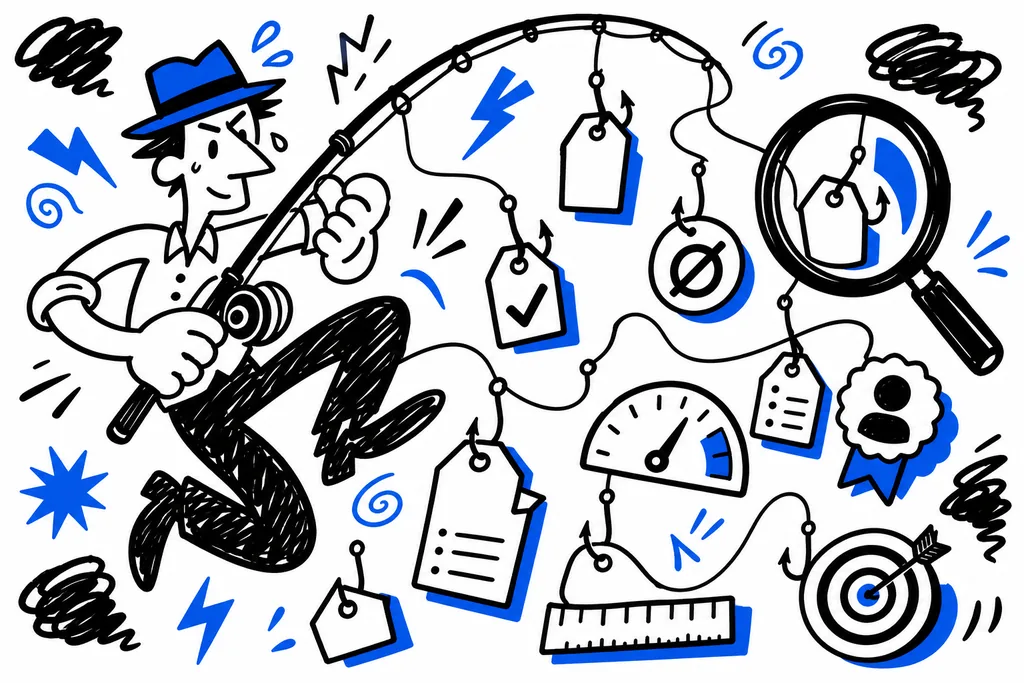
Evaluate each page against seven dimensions:
| Dimension | Metric | Threshold |
|---|---|---|
| Accuracy | Factual error count | 0 errors |
| Authority | Author E-E-A-T signals | Author bio present |
| Uniqueness | Similarity to other pages | < 70% similarity |
| Freshness | Last update date | < 12 months |
| Readability | Flesch-Kincaid score | 60+ for general content |
| Depth | Word count vs competitor avg | At least 80% |
| SEO health | Title, meta, H1, schema status | All present |
A 2025 analysis by Semrush of 10,000 pages found that pages passing all seven dimensions had a 3.4x higher probability of ranking in the top 5 organic positions (Semrush Content Quality Study, 2025).
Stage 3: Performance Categorization
Group every page into one of five buckets:
- High value, high performance. Keep, optimize incrementally, and include in link-building targets.
- High value, low performance. Refresh content, improve internal linking, and update promotion channels.
- Low value, high performance. These pages rank well but drive low value. Consolidate or redirect to higher-value pages.
- Low value, low performance. Strong candidates for pruning or 301 redirection to relevant parent pages.
- No value, zero performance. Remove or noindex. Track as a content cost reduction.
Google's 2025 guidance on content helpfulness stressed that low-value pages can dilute topical authority even if they rank, because they signal shallow coverage to both users and AI classifiers (Google Search Central Helpful Content Update Guidance, 2025).
Stage 4: Action Plan Generation
For each page, assign one of these actions:
- Keep as is. No changes needed. Flag for quarterly recheck.
- Refresh. Update statistics, examples, references, and internal links.
- Rewrite. Structural overhaul. Requires new outline, new keyword targeting, and new editorial review.
- Merge. Combine two or more thin or overlapping pages into a single comprehensive resource.
- Redirect. 301 to a stronger page. Update all internal links pointing to the old URL.
- Remove. Return 410 or 404. Ensure no critical backlinks point here.
- Noindex. For pages that must exist but should not be in search results (tag pages, filter pages, internal search results).
Audit Checklist
- [ ] Complete full URL inventory via crawler, including orphaned pages
- [ ] Join crawl data with GSC (16+ months) and GA4 (pageviews, conversions)
- [ ] Score every page across all seven quality dimensions
- [ ] Categorize each page into one of five performance buckets
- [ ] Assign one action per page from the seven-action taxonomy
- [ ] Export actionable CSV with URL, score, category, action, and priority
- [ ] Schedule quarterly reaudit cadence with automated score change alerts
- [ ] Present findings to stakeholders with before/after projections
Closing
A structured content audit checklist eliminates guesswork from content strategy decisions. By inventorying every URL, scoring against objective quality dimensions, and assigning clear actions, you move from reactive content management to proactive portfolio optimization. Note the gap between completing an audit and actually executing the actions. The checklist is only as valuable as the follow-through it drives. Schedule the next audit immediately after finishing the current one to maintain momentum.
References
[1] Botify. "The Hidden Content Crisis: Enterprise SEO Audit Report 2025." Botify, 2025. https://www.botify.com/resources/hidden-content-crisis
[2] Semrush. "Content Quality and Organic Performance: A 10,000 Page Study." Semrush Blog, 2025. https://www.semrush.com/blog/content-quality-study/
[3] Google Search Central. "Helpful Content Update Guidance 2025." Google Inc., 2025. https://developers.google.com/search/blog/2025/helpful-content-guidance
Related Articles
Discover more insights about web development and digital marketing
5 min read
Content Audit Tools: Top Solutions Compared for Enterprise and Small Sites in 2026
5 min read