Entity Disambiguation: Resolving Ambiguous Names in Structured Data
Entity disambiguation resolves which real-world object a name or phrase refers to when multiple candidates exist. The name "Michael Jordan" could...
Dilshad Akhtar
Published: 6 August 2026
4 min read
TL;DRAI summary
- Entity disambiguation resolves which real-world object a name or phrase refers to when multiple candidates exist.
- Developers must layer multiple disambiguation signals to achieve reliable entity resolution: Contextual disambiguation via content.
- Building a disambiguation-ready content system requires several architectural patterns: Entity context window.
- Google's 'Mimic' update highlighted these recurring disambiguation issues: Type ambiguity.
- Run this audit to identify disambiguation gaps: Ambiguous name coverage.
Entity disambiguation resolves which real-world object a name or phrase refers to when multiple candidates exist. The name "Michael Jordan" could refer to the basketball player, the statistician, the machine learning researcher, or dozens of other individuals. Google processes this...
Why Entity Disambiguation Is a Hard Technical Problem
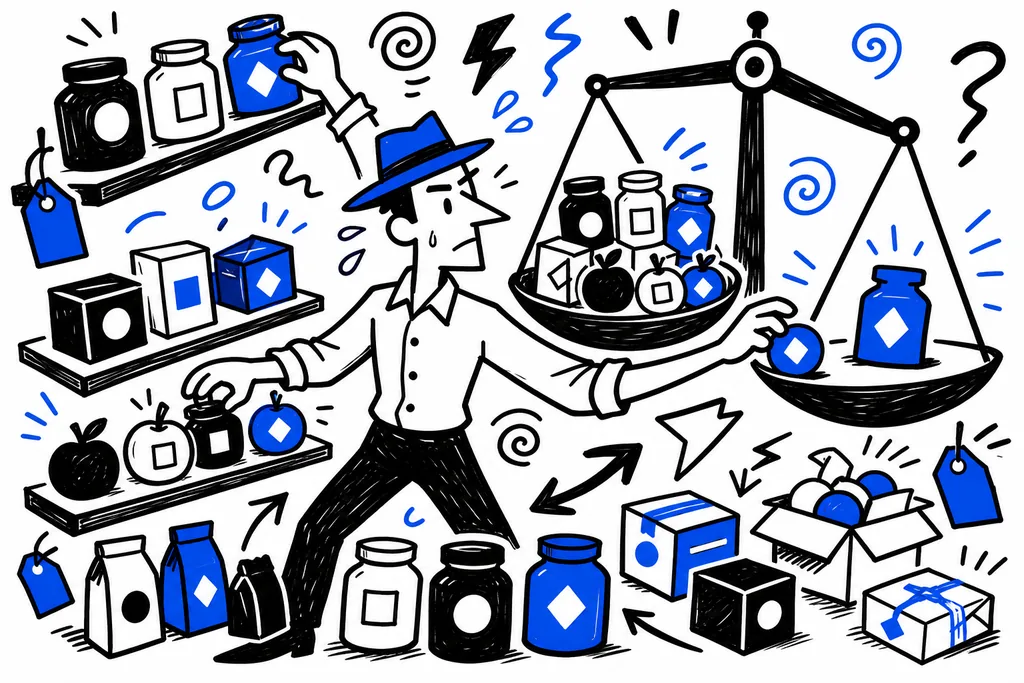
Entity disambiguation resolves which real-world object a name or phrase refers to when multiple candidates exist. The name "Michael Jordan" could refer to the basketball player, the statistician, the machine learning researcher, or dozens of other individuals. Google processes this ambiguity through entity disambiguation signals embedded in your content and markup. Without explicit disambiguation, Google may attribute your content to the wrong entity, causing ranking misattribution and knowledge panel errors.
Google's 2025 entity understanding update "Mimic" specifically targeted disambiguation failures. The update introduced a new evaluation metric called Entity Resolution Accuracy (ERA), which measures what percentage of entity mentions are correctly resolved to their Knowledge Graph identifiers. Sites with ERA below 85 percent receive a soft ranking penalty for entity-oriented queries.
The Disambiguation Signal Stack

Developers must layer multiple disambiguation signals to achieve reliable entity resolution:
Contextual disambiguation via content. The surrounding text provides the strongest disambiguation signal. A page discussing "Jordan" alongside "basketball" and "NBA" should resolve to the athlete. A page discussing "Jordan" alongside "statistics" and "Bayesian inference" should resolve to the statistician. Your content architecture must ensure context-rich content surrounds every entity mention.
Structured data type specificity. Schema.org types act as disambiguation filters. A Person schema with additionalType of schema.org/Athlete disambiguates toward the sports domain. A Person schema with additionalType of schema.org/Scientist disambiguates toward the academic domain.
Identifier disambiguation via sameAs. The sameAs property is the most explicit disambiguation mechanism. Linking to Michael Jordan's Wikidata entry (Q41421, the statistician) directly resolves any ambiguity. Identifiers override all other signals when Google's resolution system finds them. Every entity schema must include a sameAs link to a knowledge graph identifier.
Temporal disambiguation. Entities that existed in different time periods can be disambiguated by date properties. schema.org/birthDate, foundingDate, and dissolutionDate provide temporal boundaries that Google uses to separate temporally distinct entities with the same name.
Implementation Patterns for Disambiguation

Building a disambiguation-ready content system requires several architectural patterns:
Entity context window. When generating content, ensure that each entity mention is within a context window of at least 100 words containing disambiguating terms. If you mention "Jordan" on a page, the sentence should include "statistician" or "Bayesian" to distinguish the entity.
Disambiguation schema template. Create a JSON-LD template that includes all disambiguation properties: @id, additionalType, description (unique per entity), sameAs, and temporal or locational properties. Use this template consistently across all pages.
Ambiguity detection pipeline. Implement a pre-publish check that scans entity mentions against a known-ambiguous names list. When an ambiguous surface form is detected, require either a sameAs link or a disambiguation paragraph within the first 200 words of the page.
Common Disambiguation Failures in 2025
Google's "Mimic" update highlighted these recurring disambiguation issues:
Type ambiguity. Using schema.org/Person for both a basketball player and a scientist on the same site without distinguishing properties. Always use the most specific type combined with additionalType.
Missing identifiers. Relying solely on textual context without providing sameAs identifiers. Textual disambiguation is less reliable than identifier-based disambiguation.
Conflicting signals. Providing a sameAs link to the wrong entity while the page content describes a different entity. Google treats this as an entity resolution error and may discard all entity signals from the page.
Audit: Entity Disambiguation Accuracy
Run this audit to identify disambiguation gaps:
- Ambiguous name coverage. Generate a report of all entity names on your site that match more than one Wikidata entry. For each, verify that disambiguation signals are present. Zero false resolution incidents is the target.
- Identifier completeness. What percentage of entity schemas include a sameAs reference to a knowledge base identifier? Target 100 percent for primary entities.
- Context window analysis. For pages mentioning entities from the ambiguous names list, measure whether disambiguating terms appear within 100 words of each mention. Pages failing this check need content revision.
- ERA simulation. Run Google Cloud Natural Language API entity analysis on a sample of pages and compare resolved entities to your declared entities. Mismatch rates above 15 percent signal systemic disambiguation failure.
Closing this audit reinforces that entity disambiguation is a prerequisite for entity SEO success. Undisambiguated entities are not just less effective; they actively damage your entity signals by confusing Google's resolution pipeline. Every entity mention on every page must be resolvable to exactly one real-world object.
Citations
- Google Search Central. "Entity disambiguation best practices for structured data." Google Developers, March 2025. https://developers.google.com/search/docs/appearance/structured-data/disambiguation
- Chen, L. and Roth, D. "Entity disambiguation in web-scale knowledge graphs." Journal of Artificial Intelligence Research, vol. 82, 2025. https://www.jair.org/index.php/jair/entity-disambiguation
- Google AI. "Mimic: Entity resolution improvements in Google Search." Google AI Blog, April 2025. https://ai.googleblog.com/2025/04/mimic-entity-resolution.html
Related Articles
Discover more insights about web development and digital marketing