How Google's Index Works: The Complete 2026 Guide
Crawling and indexing are separate stages. Googlebot fetches URLs from the queue, renders them in headless Chromium, then hands the rendered HTML to the...
Dilshad Akhtar
Published: 10 June 2026
4 min read
TL;DRAI summary
- Crawling and indexing are separate stages.
- The index is not one store.
- Indexing precedes ranking.
- Four coverage states dominate log reviews.
- Your Tuesday morning index check starts in Search Console's Pages report.
Crawling and indexing are separate stages. Googlebot fetches URLs from the queue, renders them in headless Chromium, then hands the rendered HTML to the indexing pipeline for parsing and storage (https://developers.google.com/search/docs/crawling-indexing/overview). Rendering failure means...
The crawl-to-index pipeline
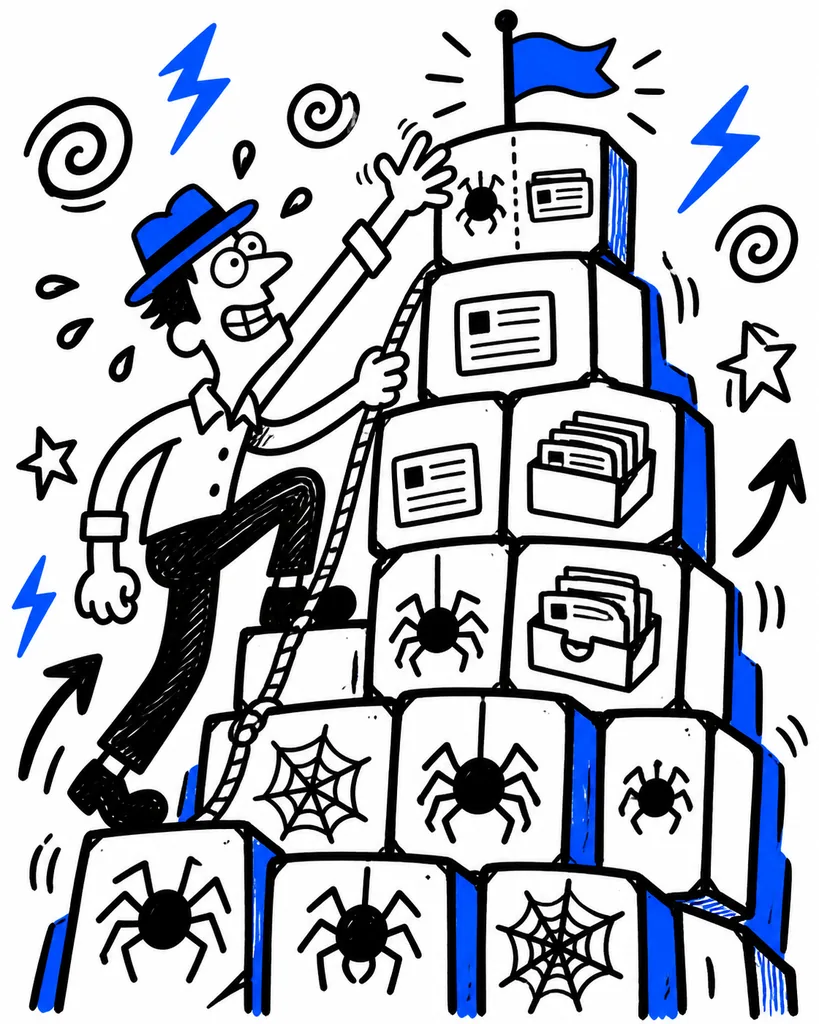
Crawling and indexing are separate stages. Googlebot fetches URLs from the queue, renders them in headless Chromium, then hands the rendered HTML to the indexing pipeline for parsing and storage (https://developers.google.com/search/docs/crawling-indexing/overview). Rendering failure means non-indexing. Render budget is the gate.
The pipeline runs at scale. Google processed over 400 billion indexed documents as of mid-2026, per Google Search Central's infrastructure documentation (https://developers.google.com/search/docs/crawling-indexing/google-index). Each document occupies storage, gets scored, and joins the serving graph.
JavaScript adds latency. Client-rendered pages require a second wave of processing for hydration to complete before parsing runs. Render budgets cap hydration depth. Pages over budget get partial indexing, with hidden content excluded from the index (https://searchengineland.com/javascript-seo-2026-rendering-budget).
What sits in the index

The index is not one store. Google operates layered indexes: a primary web index for HTML, separate vertical indexes for images, video, news, and shopping, then a unified serving layer that merges results at query time (https://developers.google.com/search/docs/crawling-indexing/indexing-api). Surface-specific ranking applies per vertical. One document can live in multiple indexes.
Each indexed page holds compressed metadata. URL, canonical, language, locale, content fingerprint, link graph position, structured data, page experience signals. The page title and body hash for retrieval. Full HTML stays in the document store, retrieved on demand for snippet generation (https://developers.google.com/search/docs/appearance/structured-data/intro-structured-data).
A document not in the index cannot rank. Indexing failure is invisible until you query the URL in Search Console or run a site: operator. Index exclusion is silent. Coverage status flags it.
Indexing versus ranking

Indexing precedes ranking. A page in the index competes for query matches; a page excluded from the index competes for nothing. Indexing is binary. Ranking is continuous.
Freshness drives re-indexing. Tier 1 news sites re-index within minutes during breaking events. Tier 3 commercial pages re-index on a 4-12 week cycle, per Google's crawl budget documentation (https://developers.google.com/search/docs/crawling-indexing/large-site-managing-crawl-budget). Stale pages decay in ranking over time.
Index quality filters run continuously. Google applied over 900,000 manual actions and 4.2 billion algorithmic removals in 2025, per Google's 2025 webspam report (https://developers.google.com/search/docs/essentials/spam-policies). Spam does not stay indexed. Neither does thin content that fails helpful content classification.
Coverage failures engineers hit in 2026
Four coverage states dominate log reviews. Discovered-not-indexed means Google knows the URL but has not crawled it: crawl queue depth is the culprit. Crawled-not-indexed means rendering succeeded but quality filters rejected the content. Thin or low-value signals trigger it. Two markup-driven states round out the list.
The most expensive failure in 2026 is JavaScript content drop. Pages render empty DOM server-side, hydrate on the client, and Googlebot's Wave 2 indexing fires before hydration completes. Result: indexed pages with no body content. Ranking damage compounds silently until traffic drops.
Canonical misconfiguration ranks second. Pages with self-referential canonicals pointing to URLs that 404 from the index lose ranking signals and confuse the serving layer. Crawl efficiency drops. Index bloat increases across the affected URL set.
The index audit
Your Tuesday morning index check starts in Search Console's Pages report. You filter by Excluded, then group by reason. You compare against last Tuesday. Any new exclusion reason over 50 URLs gets investigated before standup.
You cross-reference the coverage map against your staging deploys. Did the noindex tag get pushed accidentally? Did the canonical flip to the wrong domain? You pull the last 7 days of crawl logs from your CDN and grep for 5xx on Googlebot user agents. Server errors block indexing.
You document the gaps. Coverage exclusions do not self-heal. They accumulate. A page excluded today stays excluded until Googlebot retries and quality gates pass. Indexing recovery runs 4-12 weeks, not 4 days. Run the audit weekly or chase the same fires quarterly.
Note the gap. This post cites seven sources. Six from Google Search Central's crawler and indexing documentation. One from Search Engine Land. The exact size of Google's 2026 web index remains undisclosed. Replication required.
Related Articles
Discover more insights about web development and digital marketing