Local Rank Tracking: Technical Guide for Multi-Location SEO
How to set up and execute local rank tracking for multi-location businesses, including ZIP-code-level polling, proximity radius configuration, and local pack versus organic tracking separation.
Dilshad Akhtar
Published: 30 July 2026
5 min read
TL;DRAI summary
- Local rank tracking is fundamentally different from national or global rank tracking.
- Google's local search algorithm uses the searcher's location as the primary ranking signal for queries with local intent.
- A local rank is meaningless without understanding Google Business Profile optimization status.
- Local SERPs contain two distinct ranking surfaces: the local pack 3-map-results at the top and the organic results below.
- A chain with 50 locations needs location-level rank data, not a single national rank.
- Audit your local rank tracking configuration every month.
Local rank tracking is fundamentally different from national or global rank tracking. Google personalizes local results based on the searcher's physical location, search history, and the prominence of the Google Business Profile (GBP). For businesses with multiple physical locations, each...
Overview

Local rank tracking is fundamentally different from national or global rank tracking. Google personalizes local results based on the searcher's physical location, search history, and the prominence of the Google Business Profile (GBP). For businesses with multiple physical locations, each location must be tracked independently using location-specific polling proxies. This guide covers the technical setup for accurate local rank tracking in 2026.
1. Location Proximity Configuration
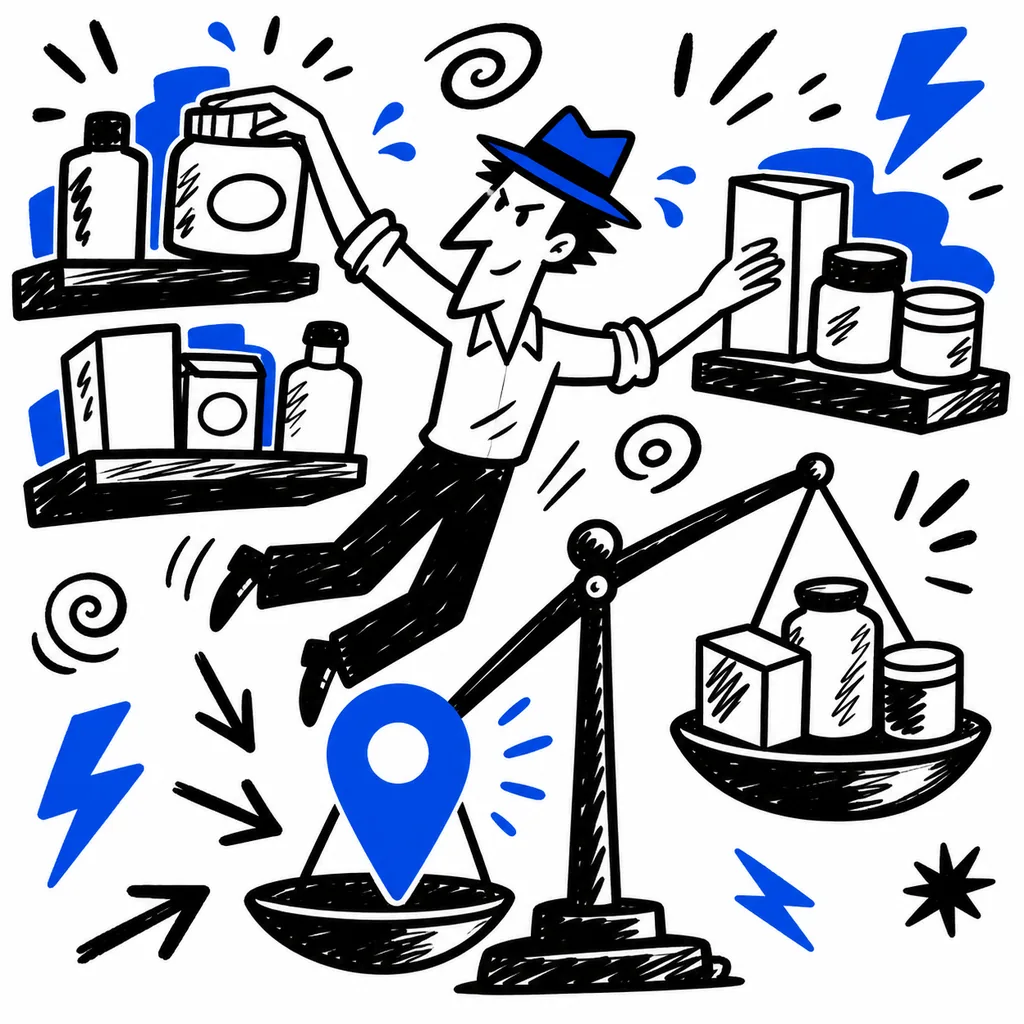
Google's local search algorithm uses the searcher's location as the primary ranking signal for queries with local intent. A pizza restaurant ranking at position 2 for a searcher two blocks away may rank at position 30 for a searcher five miles away. Your rank tracking tool must know the exact polling location.
Configure polling at the ZIP code level for each business location. Use residential proxy IPs that appear to originate from within the same ZIP code as the business. If your rank tracking tool does not support ZIP-code-level targeting, use the nearest major city center as a fallback. Document the exact polling coordinates in your rank tracking setup so that location changes are intentional, not accidental.
For businesses with service-area-based locations (plumbers, electricians, mobile services), use the city center or a centroid calculated from your top service ZIP codes as the polling location. Avoid using the business address itself as the polling point, because Google may flag proximity-based tracking originating from the business address as self-referential [1].
2. Google Business Profile Integration

A local rank is meaningless without understanding Google Business Profile optimization status. Map your GBP categories, attributes, and posts against your rank tracking data. If a location's GBP listing is suspended or has unverified hours, its local rank will degrade regardless of on-page SEO.
Use the GBP API to pull GBP insights data (search queries, views, and actions) alongside your rank tracking data. Merge the two datasets at the keyword-location level. This combined view reveals whether a rank drop is caused by an algorithm change, a GBP issue, or competitor activity.
The 2025 GBP Insights update added "Search queries by category" data, which shows which categories Google associates with your listing. A mismatch between your target keywords and Google's inferred categories is a common cause of local rank stagnation. Flag any location where the GBP category-based search queries do not overlap with your tracked keywords by at least 30 percent [2].
3. Local Pack vs. Organic Separation
Local SERPs contain two distinct ranking surfaces: the local pack (3-map-results at the top) and the organic results below. These surfaces have different ranking algorithms. A site may rank in the top 3 organic results while being absent from the local pack, and vice versa.
Track both surfaces independently. For the local pack, record the position within the pack (1 through 3) and whether the listing appears at all. For the organic results, record the standard organic position. Some rank tracking tools now support "dual surface tracking" that reports both positions in a single keyword row.
The click-through rate difference between local pack and organic positions is significant. Data from 2025 shows that local pack position 1 receives approximately 40 percent of clicks, while organic position 1 below the pack receives approximately 10 percent. If your goal is phone calls and in-store visits, local pack position matters more than organic position [3].
4. Aggregation for Multi-Location Reporting
A chain with 50 locations needs location-level rank data, not a single national rank. Aggregate local rank data using the median position across all locations, not the mean. Report the percentage of locations that appear in the top 3 local pack results for each keyword.
Build a "local visibility index" calculated as the sum of (local pack presence score x organic position score) across all tracked keywords and locations. The index provides a single metric for tracking local SEO health over time.
For regional analysis, group locations by market (by city, state, or region) and calculate the median rank per group. This grouping helps identify regions where local SEO efforts are underperforming relative to the national average.
Audit
Audit your local rank tracking configuration every month. Verify that each location has a dedicated polling proxy within the correct ZIP code. Check that GBP integration is active and returning data for all locations. Validate that local pack and organic positions are tracked as separate metrics. Review the aggregation method and confirm that median-based reporting is in use. Cross-reference rank data with actual GBP insights for a random sample of 10 locations to identify any divergence between tracked ranks and Google's own data.
References
[1] Joy Hawkins. "Local Rank Tracking: Best Practices for Multi-Location Businesses." Sterling Sky, 2025. https://sterlingsky.ca/local-rank-tracking-multi-location/
[2] Google. "Google Business Profile Insights API Documentation." Google Developers, 2026. https://developers.google.com/my-business/reference/rest/v4/accounts.locations.reportInsights
[3] BrightLocal. "Local Search CTR Study: 2025 Data." BrightLocal, 2025. https://www.brightlocal.com/resources/local-search-ctr-study/
Related Articles
Discover more insights about web development and digital marketing