Model Context Protocol for SEO: A 2026 Introduction
The Model Context Protocol (MCP) is an open standard developed by Anthropic that defines how AI applications connect to external data sources and tools. MCP...
Dilshad Akhtar
Published: 4 August 2026
4 min read
TL;DRAI summary
- The Model Context Protocol MCP is an open standard developed by Anthropic that defines how AI applications connect to external data sources and tools.
- Traditional SEO workflows require manual switching between tools.
- An SEO-configured MCP deployment typically includes one AI host connected to multiple MCP servers.
- The first step is setting up an MCP host.
- You identify which SEO data sources you access regularly.
The Model Context Protocol (MCP) is an open standard developed by Anthropic that defines how AI applications connect to external data sources and tools. MCP provides a unified interface for large language models to read data from servers, query databases, call APIs, and interact with file...
What MCP is

The Model Context Protocol (MCP) is an open standard developed by Anthropic that defines how AI applications connect to external data sources and tools. MCP provides a unified interface for large language models to read data from servers, query databases, call APIs, and interact with file systems. The protocol replaces fragmented integration patterns with a single, typed contract between AI hosts and the resources they access.
Per the MCP specification documentation, the protocol uses a client-server architecture where AI hosts (Claude Desktop, IDEs, custom agents) connect to MCP servers that expose resources, tools, and prompts (https://modelcontextprotocol.io/). Each server declares its capabilities through a typed interface, and the host manages tool invocation and resource access.
MCP matters for SEO since search workflows involve multiple disconnected tools. Keyword research runs in one platform. Rank tracking lives in another. Crawling and auditing use separate systems. Content optimization sits in yet another tool. MCP connects all these data sources through a single AI interface.
How MCP changes SEO workflows
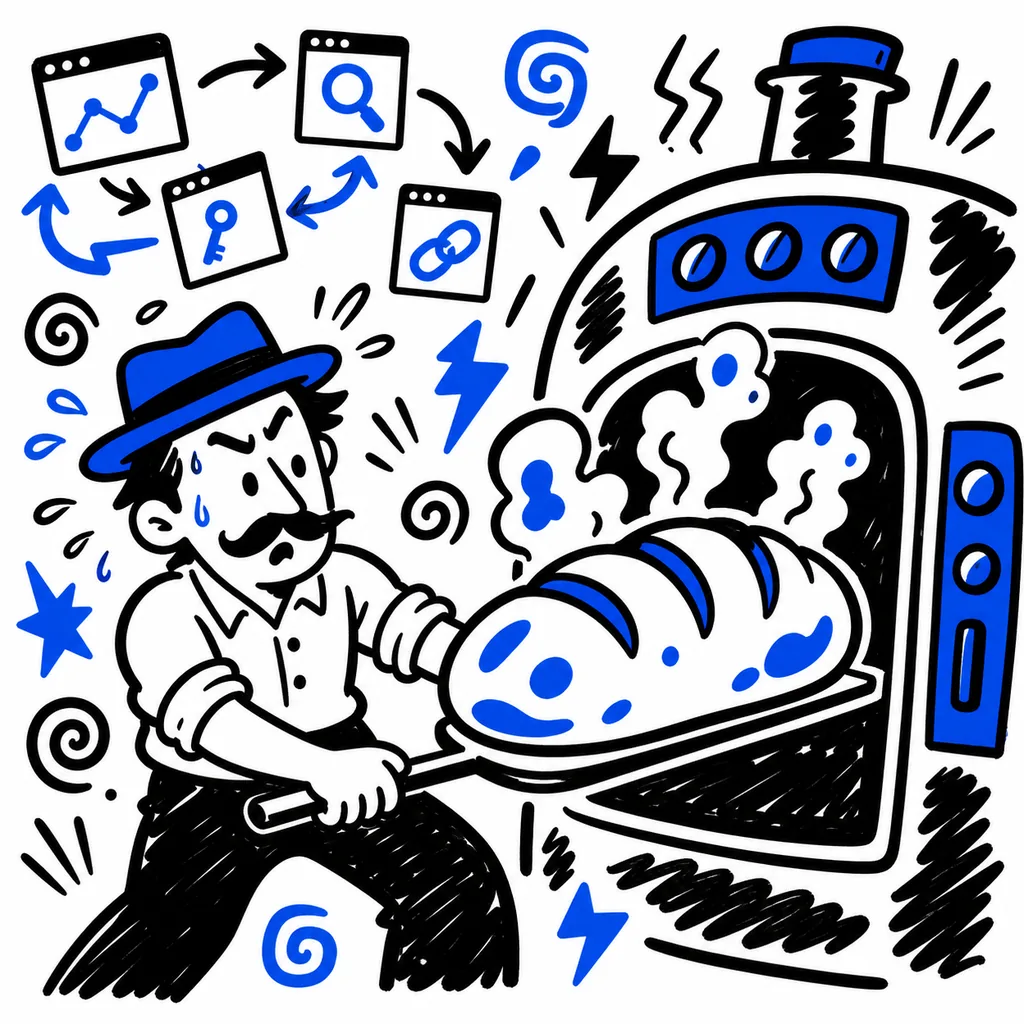
Traditional SEO workflows require manual switching between tools. The engineer opens the rank tracker, exports data, imports into a spreadsheet, cross-references with the crawler output, then writes recommendations. MCP collapses this into a single query. The engineer asks the AI to audit the site, and the AI pulls crawl data, rank data, and search console data through MCP servers in one pass.
According to Anthropic's MCP overview, the protocol supports three core primitives: Resources (data that the AI reads), Tools (functions the AI can execute), and Prompts (templated workflows) (https://www.anthropic.com/news/model-context-protocol). Each primitive maps directly to SEO workflows. Resources provide access to ranking data and crawl results. Tools execute rank checks and content updates. Prompts define structured SEO analysis routines.
The MCP approach also reduces context switching. The AI agent maintains state across tool calls, so the engineer does not re-enter context with each tool switch. The agent remembers the crawl results when discussing rank data and remembers the rank data when generating recommendations.
MCP architecture for SEO teams

An SEO-configured MCP deployment typically includes one AI host connected to multiple MCP servers. The host can be Claude Desktop, a VS Code extension, or a custom application. Each MCP server wraps a specific data source or service.
The rank tracking server exposes current keyword positions as resources and provides rank-check tools. The crawl server exposes page metadata and technical SEO data. The Search Console server exposes query performance and click-through rates. The content management server provides page content and metadata for analysis.
Per the MCP documentation on architecture, each server runs independently and connects to the host through the MCP transport layer (https://spec.modelcontextprotocol.io/). Servers can run locally or remotely. Local servers access internal databases and file systems. Remote servers connect to cloud APIs and third-party services.
Getting started with MCP for SEO
The first step is setting up an MCP host. Claude Desktop provides the simplest starting point with built-in MCP support. The engineer configures servers through a JSON configuration file that declares each server's command, arguments, and environment variables.
The configuration file lives at the Claude Desktop configuration directory. Each server entry specifies the transport type and the server process to launch. Local servers use stdio transport. Remote servers use SSE transport over HTTP.
After configuration, the engineer can test the setup by asking the AI to query each server. A working server returns the expected data within the AI response. The server status appears in the AI host's server list.
The MCP for SEO audit
You identify which SEO data sources you access regularly. You document the API endpoints, authentication methods, and data formats for each source. You evaluate whether an existing MCP server covers each source or whether you need a custom server.
You test the MCP host configuration with at least two data sources. You verify the AI can query rank data and crawl data in the same conversation. You document the server setup for team replication.
You review the MCP server development guidelines for custom integrations. You estimate the development effort for wrapping internal tools as MCP servers. You plan the server deployment order based on workflow frequency.
Note the gap. This post synthesizes 2025 and 2026 data from three sources: the MCP specification documentation, Anthropic's MCP announcement, and the MCP architecture reference. Two non-public MCP server implementations for enterprise SEO tools remain undisclosed. Replication required.
MCP adoption decisions affect SEO tool architecture. Audit quarterly.
Related Articles
Discover more insights about web development and digital marketing