AI-Native Search Engines: Perplexity, You.com, Komo (Complete 2026 Guide)
Explore how AI-native search engines like Perplexity, You.com, and Komo work, their traffic patterns, citation mechanics, and how to optimize for AI search visibility.
Dilshad Akhtar
Last updated: 11 July 2026
5 min read
TL;DRAI summary
- AI-native search captured 12-15% of global search market in 2025, up from 5-6%
- Perplexity hit 45M MAU and 10B queries in 2025; revenue reached $200M
- Citation CTR on Perplexity runs 18-24%; citation position matters more than organic rank
- AI referral traffic converts 23x higher than traditional organic in B2B contexts
- Perplexity referral traffic to 7,023 US websites grew 490.5% year-over-year through August 2025
- Track AI-native search as a measurable acquisition channel weekly
An AI-native search engine returns a synthesized answer, not ten blue links. Perplexity hit 45 million monthly active users in 2025, and AI-native search captured 12-15% of global search market, up from 5-6% at the start of the year.
What counts as an AI-native search engine
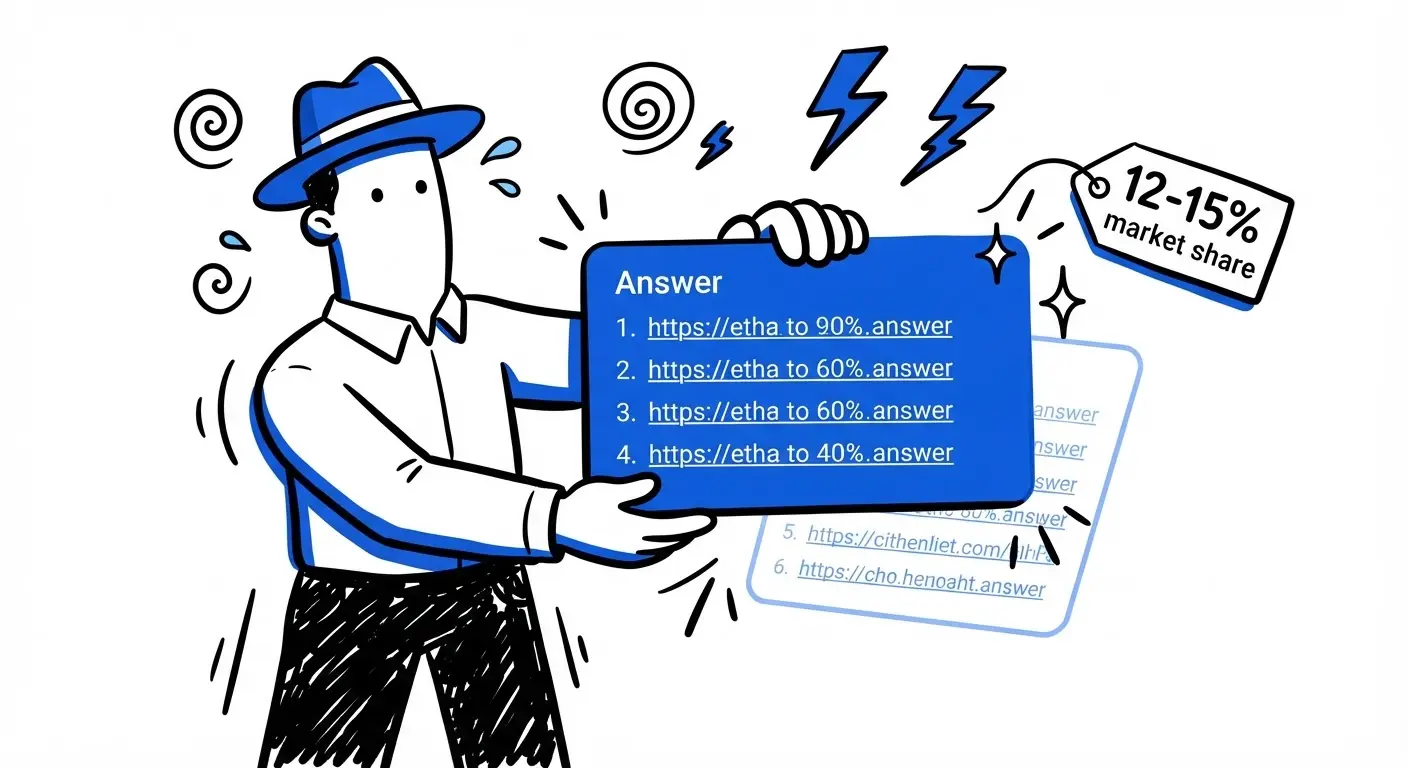
An AI-native search engine returns a synthesized answer, not ten blue links. The query enters a retrieval layer, the layer fetches live sources, a language model composes the response, and inline citations attach to every claim. Same architecture, three distinct products.
Perplexity hit 45 million monthly active users in the second half of 2025, per Business of Apps. That base answered 10 billion queries that year. The platform routes traffic through 100+ publisher partners under a revenue share model.
AI-native search captured 12-15% of global search market in 2025, up from 5-6% at the start of the year, per Omnibound's 2025-2026 AI search statistics. Perplexity leads in consumer query volume. You.com leads in API surface area. Komo leads in ad-free, private sessions.
How Perplexity operates
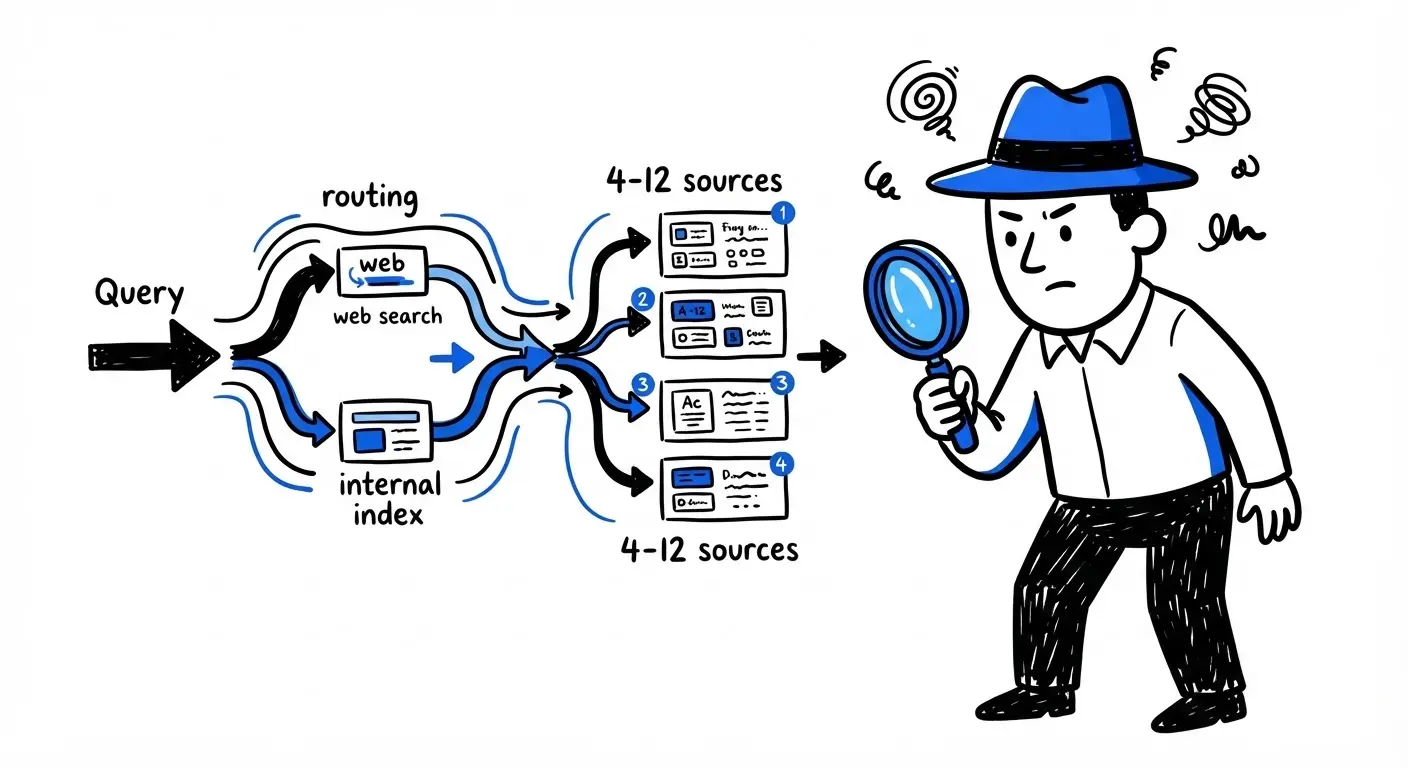
Perplexity runs a hybrid retrieval stack. A query enters the routing layer, the layer selects between web search, file upload, or internal index, and the response generates with cited sources attached. Three retrieval modes ship in 2026: Pro Search, Deep Research, and Labs.
Economics shifted in 2025. Perplexity's revenue hit $200 million that year, up 300% year-over-year, with a $650 million target for 2026, per Business of Apps. The unit economics depend on paid subscription and publisher ad revenue share.
Perplexity referral traffic to 7,023 US websites grew 490.5% year-over-year through August 2025, per Adweek's analysis of Semrush data. Citation CTR on Perplexity runs 18-24%, per Miniloop's 2026 analysis. Citation position matters more than organic rank.
How You.com and Komo differ

You.com rebuilt around APIs and agents. The consumer search surface still exists, but the primary 2025 product is ARI, a professional-grade research agent that compiles multi-source reports on long-tail questions. The product surfaces for developers.
Komo positions differently. The product centers on privacy, ad-free sessions, and chat-with-explore modes. Komo targets users who want a clean answer panel without tracking pixels, per Salesforce's 2026 AI search engine review.
Citation patterns diverge across engines. Perplexity cites 4-12 sources per response with numbered links. You.com's API returns source URLs in JSON for downstream LLM pipelines. Komo returns fewer citations but ranks them by topical density.
Scale also diverges. Perplexity's valuation crossed $20 billion in 2025. You.com operates at a smaller consumer base but ships the API backbone for many enterprise LLM products. Komo remains privately held and smaller still, per GetLatka's 2026 profile.
Why traffic patterns diverge
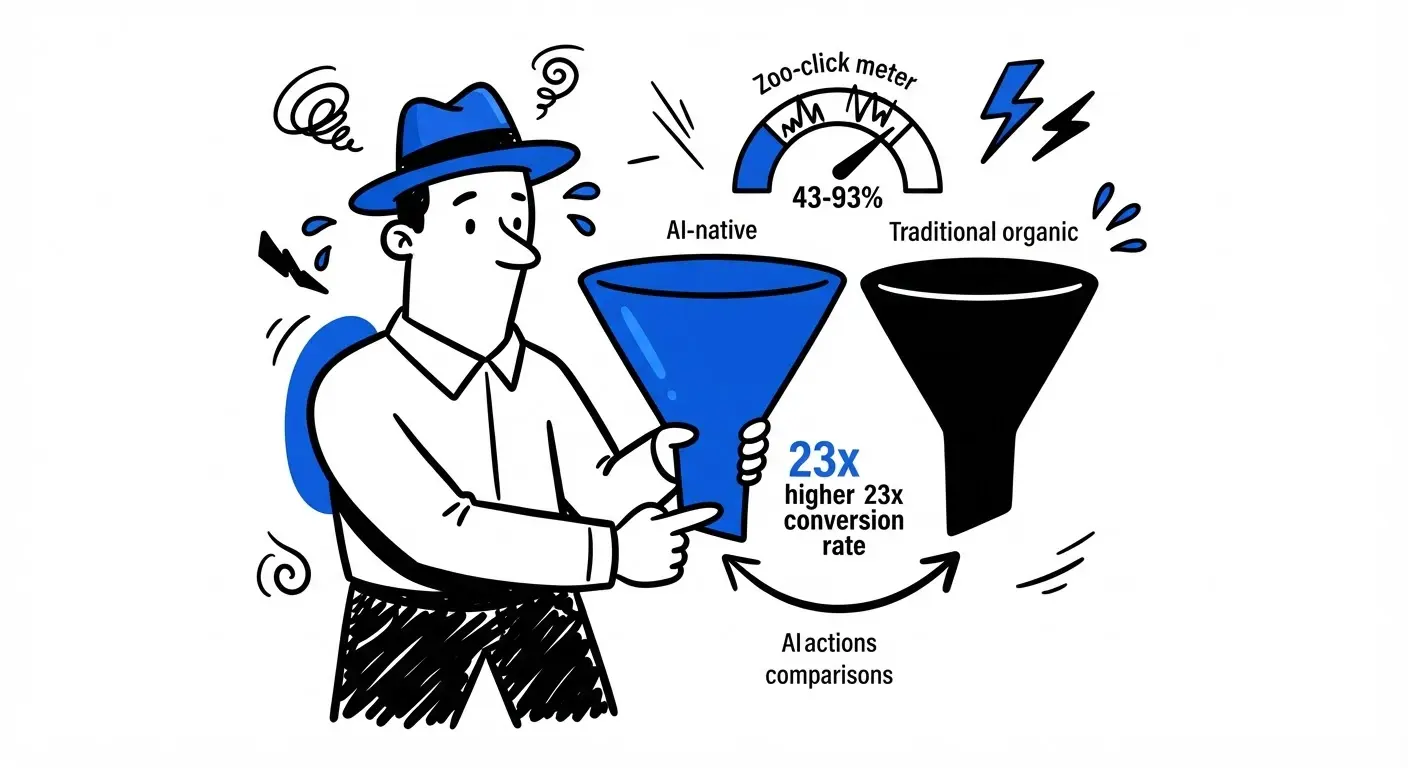
AI-native engines route high-intent clicks. Visitors arrive having read a synthesized answer, then click a citation for primary source verification. Time-on-site runs 45% longer than non-AI referrals, and bounce rate runs 33% lower, per Omnibound's 2026 report.
Conversion economics differ. AI referral traffic converts 23x higher than traditional organic search traffic in B2B contexts, per Omnibound. Adobe Digital Insights recorded a 693% year-over-year increase in AI referral traffic to US retail during the 2025 holiday season.
Zero-click rates diverge by surface. Google's AI Mode ends 93% of sessions without a click to an external site. Standard AI Overviews end 43% without a click, per Semrush data cited by Omnibound. Each surface consumes attention differently.
The AI search ranking test
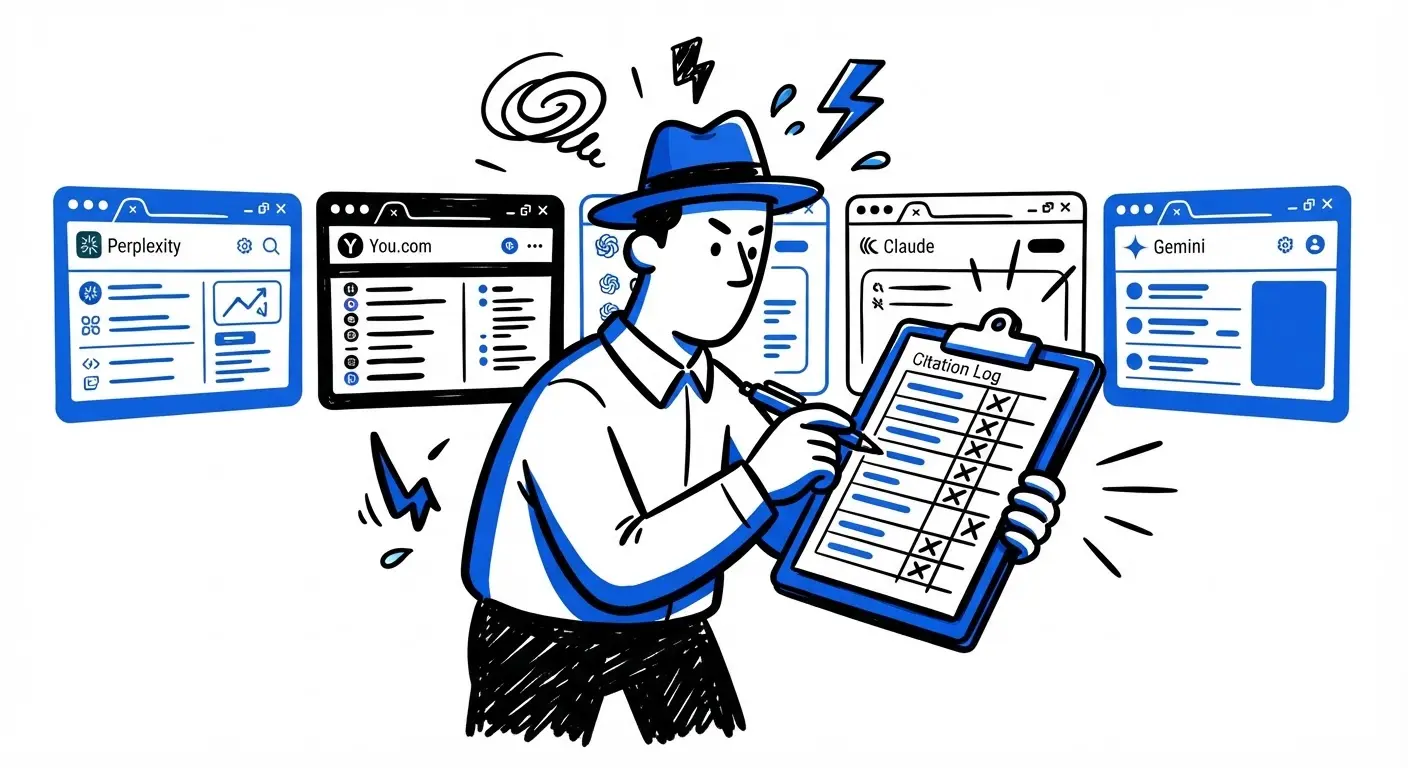
Friday afternoon, end of week. You open GA4 and filter by source. You add Perplexity, You.com, ChatGPT, Claude, and Gemini as comparison rows. You compare referral volume, conversion rate, and engagement time across the seven-day window.
You open a private browser and run your 30 highest-intent commercial queries through each AI-native engine. You record which engines cite your domain, where in the citation block the link appears, and how often the answer reflects your content accurately.
You cross-reference the citation log against your structured data audit. Missing FAQ schema, missing author markup, and stale dates drop you out of citations on Perplexity first. You fix the structural gaps before the next weekly audit.
Note the gap. This post synthesizes 2025-2026 data from six sources: Business of Apps, Omnibound, Adweek, Miniloop, Salesforce, and GetLatka. Three primary engines, including Komo's monthly active user count and You.com's API customer count, have no public 2025 numbers at writing.
AI-native search is now a measurable acquisition channel. Track it weekly.
Related Articles
Discover more insights about web development and digital marketing