4 min read
Google moved brand AI Overviews into the right column on 2 November 2026. The summary now quotes pages you do not own, and your rank tracker misreads it.

On 2 November 2026 Google moved AI Overviews for many brand searches into the right column of desktop results. Your website is back at the top of the main list. The summary about your company now sits where the knowledge panel used to be. You cannot edit that summary, and Google has not explained the change.
Before this week, a search for a large brand often opened with an AI summary in the main column. The brand's own site sat underneath it. Ahrefs put 48 of the 63 brand summaries it tracked in what it calls position one.
The page now looks closer to the old ten blue links. A search for Apple opens with apple.com and its sitelinks on the left. The right column carries a panel labelled AI Overview. That panel mixes a shop rating, product images, delivery terms and generated text in one box.
Barry Schwartz reported the move at Search Engine Roundtable: https://www.seroundtable.com/google-ai-overviews-brands-right-42440.html
Chris Long spotted the layout and posted it on X. Two days earlier, on 31 October 2026, David McSweeney had posted the same pattern. Google made no announcement and no help page changed. Every published example shows results for the United States, so nobody knows yet how far it reaches.
Google has stayed silent on whether the layout is a test or stays for good. Treat it as permanent anyway, because that is the safer planning assumption.
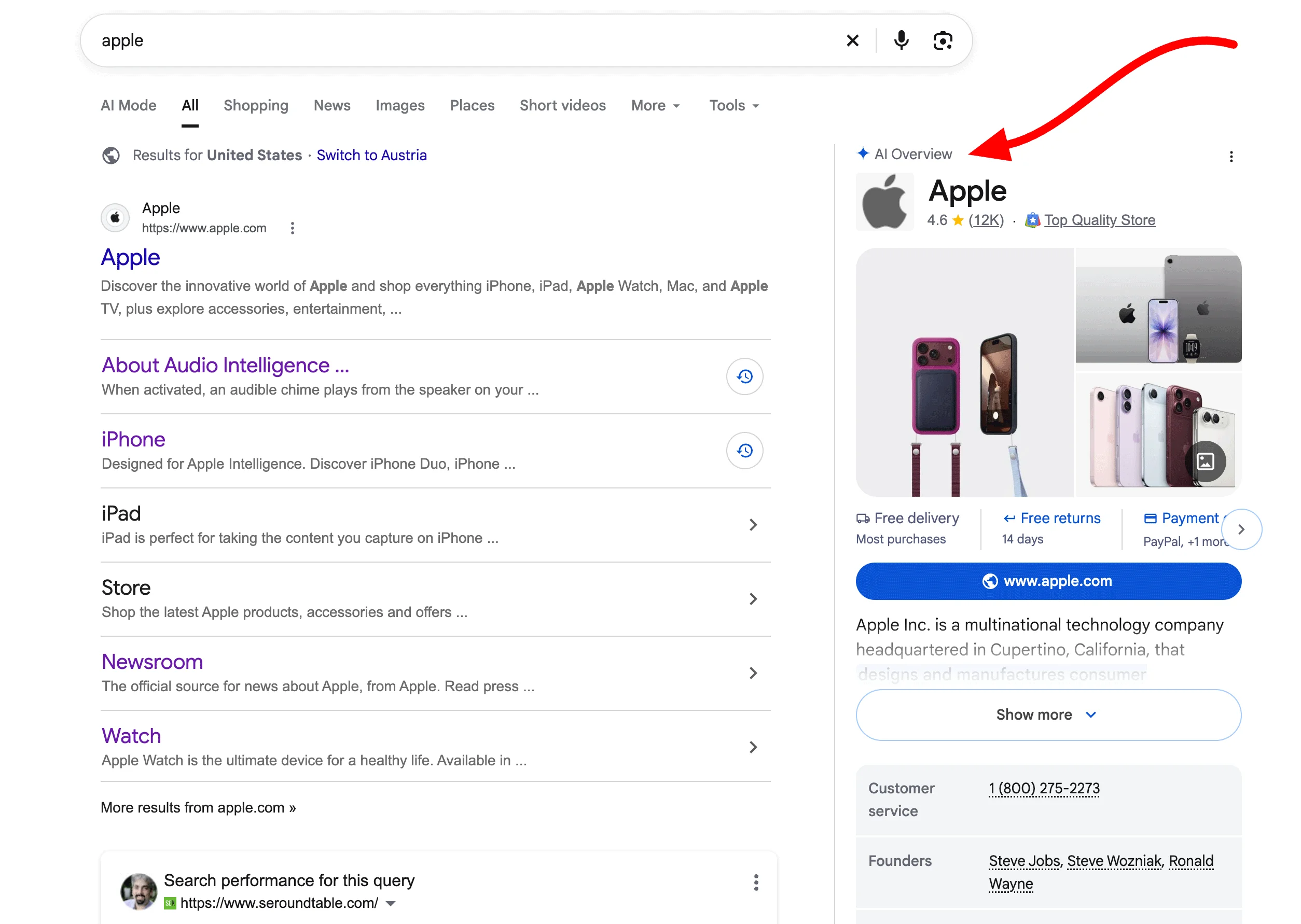
The new box glues two things together: generated text and structured fact rows. They come from different systems, so they can disagree in public.
Search for Zillow and the generated text calls it a company "founded in 2006". A fact row a few lines below says "Founded: 2004". Both years have some basis in the company's history. The panel prints both and explains neither.
That is the trade you just made. A knowledge panel drew on entity data you could correct through a claimed profile. The generated text is written by a model from sources it picks. If the model picks a page with a wrong founding year, that year lands next to your name.
Ahrefs looked at the sources behind those brand summaries. Wikipedia appeared in 41 of the 57 panels that listed sources. YouTube appeared in 22, LinkedIn in 13. Your own website was not the main supplier.
That ranking matters for a small company, because the top source is often a page you do not own and cannot edit. It also tells you where to spend the hour: the third party pages the model already quotes.
Google's own guidance for AI features asks for readable text, internal links, and structured data that matches what visitors see: https://developers.google.com/search/docs/appearance/ai-features
Most rank trackers count a brand search by whoever sits first in the main column. Before 2 November the answer was often the AI summary. Now the answer is your own homepage. Two different outcomes land in the same cell, so a month on month chart will show a jump that never happened.
Search Console does not help either, because Google folds AI Overviews into the normal web traffic figures. It reports no separate clicks for a side panel summary. The same day, Gary Illyes suggested that report is unlikely to carry clicks or queries.
Our own numbers show the gap. In the last 90 days our site took 2392 impressions across 94 queries about AI Overviews, with 0 clicks. The query "ai overviews rank tracker" alone brought 487 impressions. People are looking for a way to measure this, and they are not finding it here yet.
| Surface on a brand search | Who writes it | Can you correct a wrong line |
|---|---|---|
| Organic result | You, on your own page | Yes, edit the page |
| Knowledge panel | Google, from entity data | Yes, claim the entity and suggest edits |
| AI Overview side panel | A model, from sources it selects | No route that Google documents |
| AI Mode answer | A model, from live searches | No route that Google documents |
Run your company name on desktop with the location set to the United States. Read the right column before you read your own page.
Then compare the fact rows against your About page. Founding year, headquarters, founders and chief executive are the four that appear most often, so write each one as plain text on a single page. A model can copy a plain sentence, but it struggles with a logo and a decorative timeline.
Then check the third party pages the summary quotes. Wikipedia, LinkedIn and YouTube rank high in the Ahrefs list. Correct the wrong lines there, because those lines reach the panel faster than your own site does.
One more thing worth keeping: a routine beats a one-off look. Our earlier guide on brand SERP monitoring lists the features to watch each week.
One more item: watch the paid side. Buyers told Digiday that part of the Google budget now faces review, with one agency putting the slice at 10 to 30%. The brand click got dearer too, up 5% in the quarter.
The organic panel is free. The brand click is not.
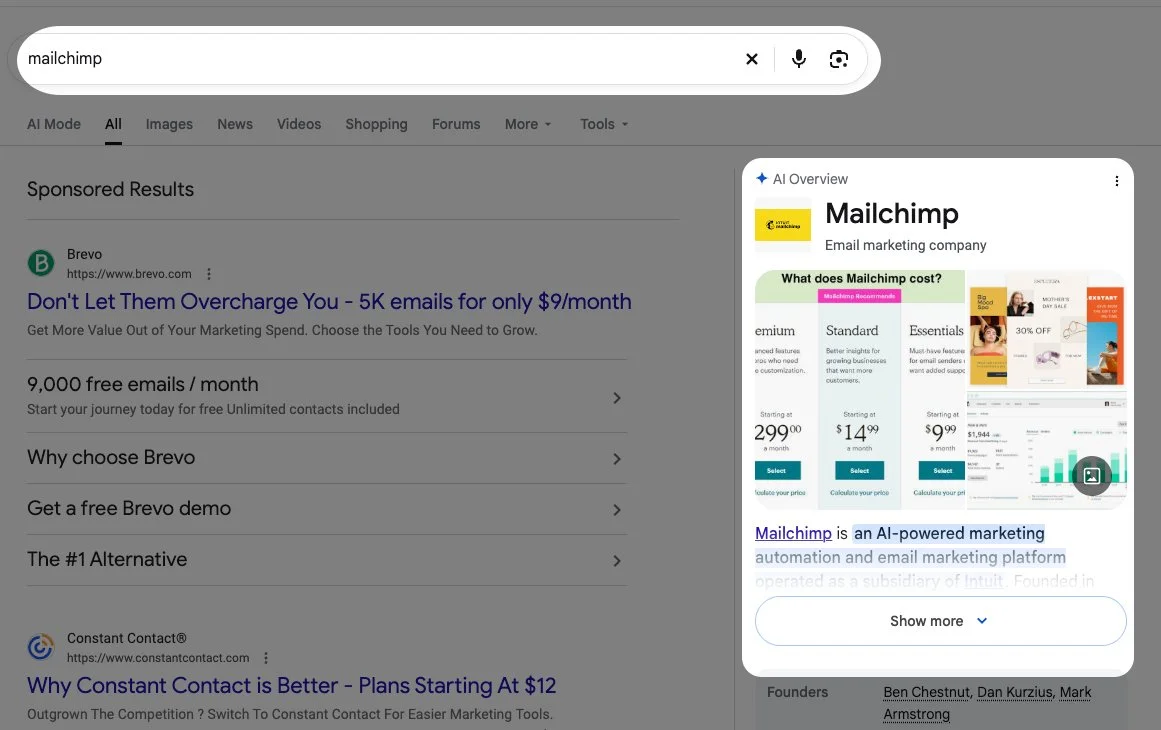
No click data exists for this placement. Nobody has published the traffic change after the move, because the move is two days old. If your brand panel used to answer the question inside the results and now a reader sees your site first, clicks may rise. That is a guess, not a finding, so say so in your own reporting.
Measure brand searches as one block for the next four weeks. Compare clicks to the same period last year rather than to last week. Then decide whether the side panel helped or hurt.
If your brand panel carries a wrong fact today, book a call and we will fix the page the model reads: book a call
Discover more insights about web development and digital marketing