SEO vs SEM: What's the Difference and When to Use Each in 2026
Understand the difference between SEO and SEM in 2026. Learn cost and conversion data, when each channel wins, and how to run an end-of-quarter attribution audit.
Dilshad Akhtar
Last updated: 25 June 2026
6 min read
TL;DRAI summary
- SEO earns organic clicks; SEM covers both SEO and paid search advertising — the two definitions create budget disputes every year
- Average Google Ads CPC hit $5.26 in 2025, up 12.9%, while conversion rates improved to 7.52% on average
- SEO converts at 2.4% across industries versus 1.3% for PPC; in financial services, SEO converts at 7.3x the rate of PPC
- SEO wins with a 6-month runway and informational queries; SEM wins when you need traffic this week or run time-sensitive promotions
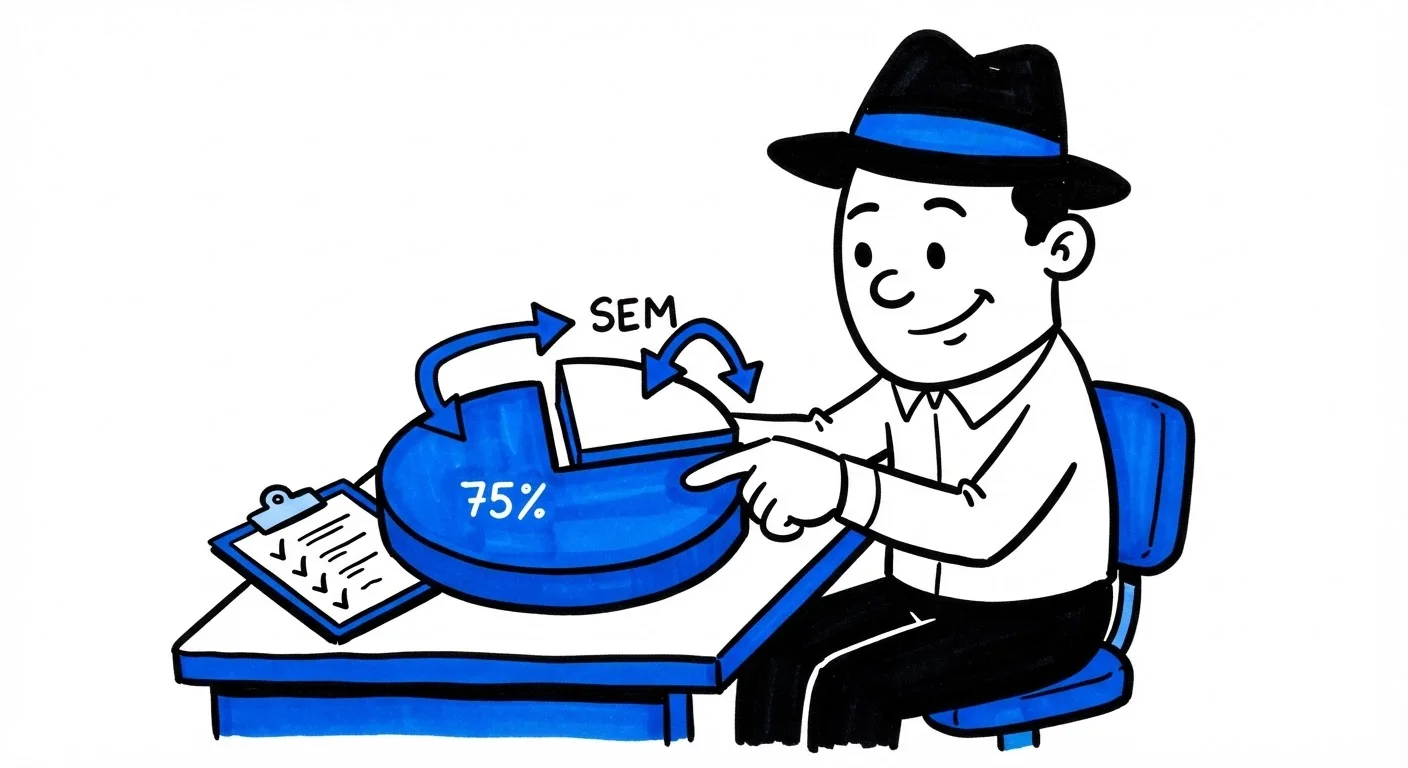
- Most companies should split 75% of search budget to SEO and 25% to PPC, with SEO assisting SEM in roughly 60% of multi-touch conversions
SEO and SEM serve two different roles on the same search results page — one earns organic clicks through ranking work, the other pays per click. With average Google Ads CPC hitting $5.26 in 2025 and SEO converting at 2.4% versus PPC at 1.3%, deciding when to use each channel comes down to runway, intent, and attribution awareness.
Definitions that matter in 2026
SEO earns organic clicks through ranking work, content creation, and external link acquisition. SEM is the umbrella term covering SEO plus paid search advertising, per SEMrush's SEO vs SEM explainer. One channel is free, the other bills per click.
Paid search ads display a "Sponsored" label and live above organic results in the SERP, incurring cost-per-click charges every time a user clicks through. Organic listings appear below, accrue no per-click cost, and require sustained ranking effort. Two revenue models, same results page.
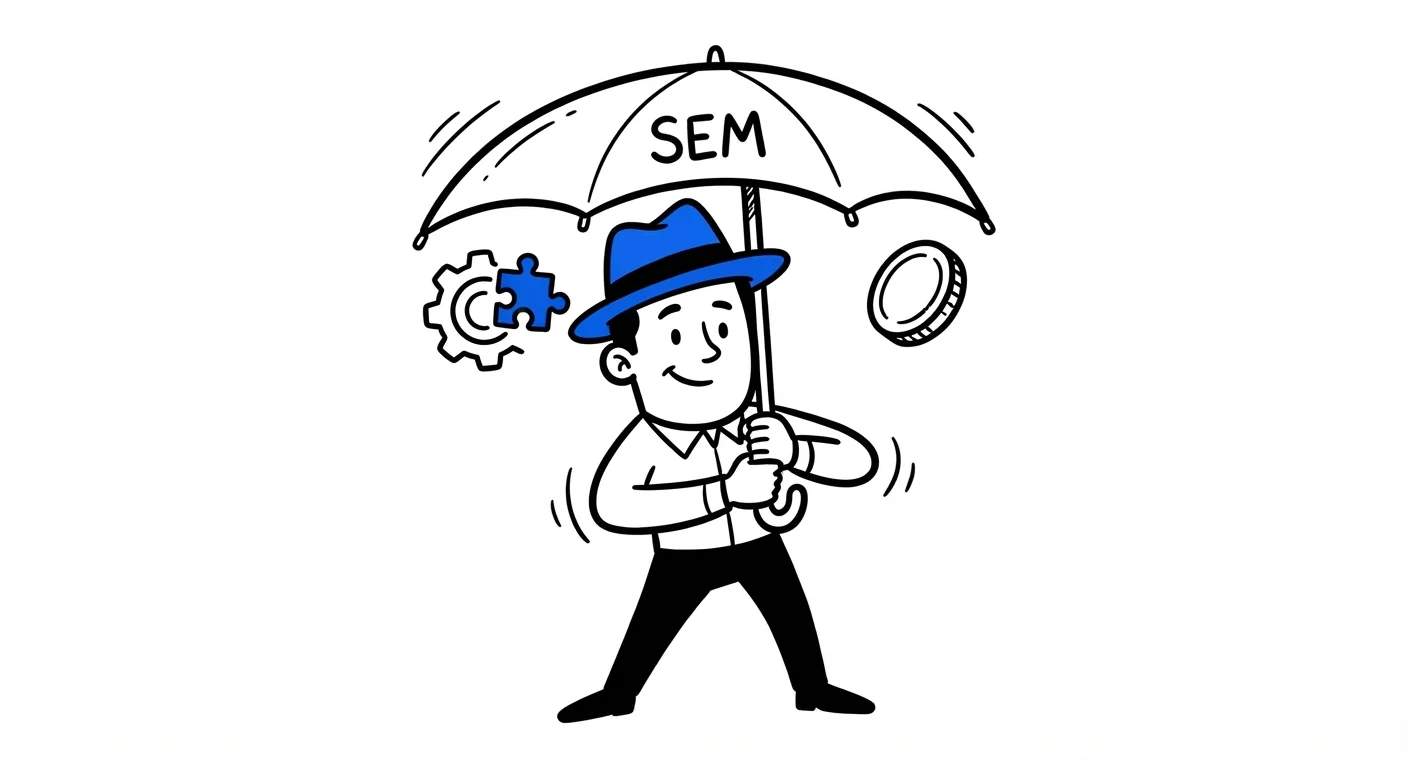
SEM also refers narrowly to paid search campaigns alone, with SEO excluded entirely. This second definition confuses practitioners every year and creates budget disputes between content and acquisition teams. Confirm the scope before allocating spend across channels.
The 2025 cost and conversion data
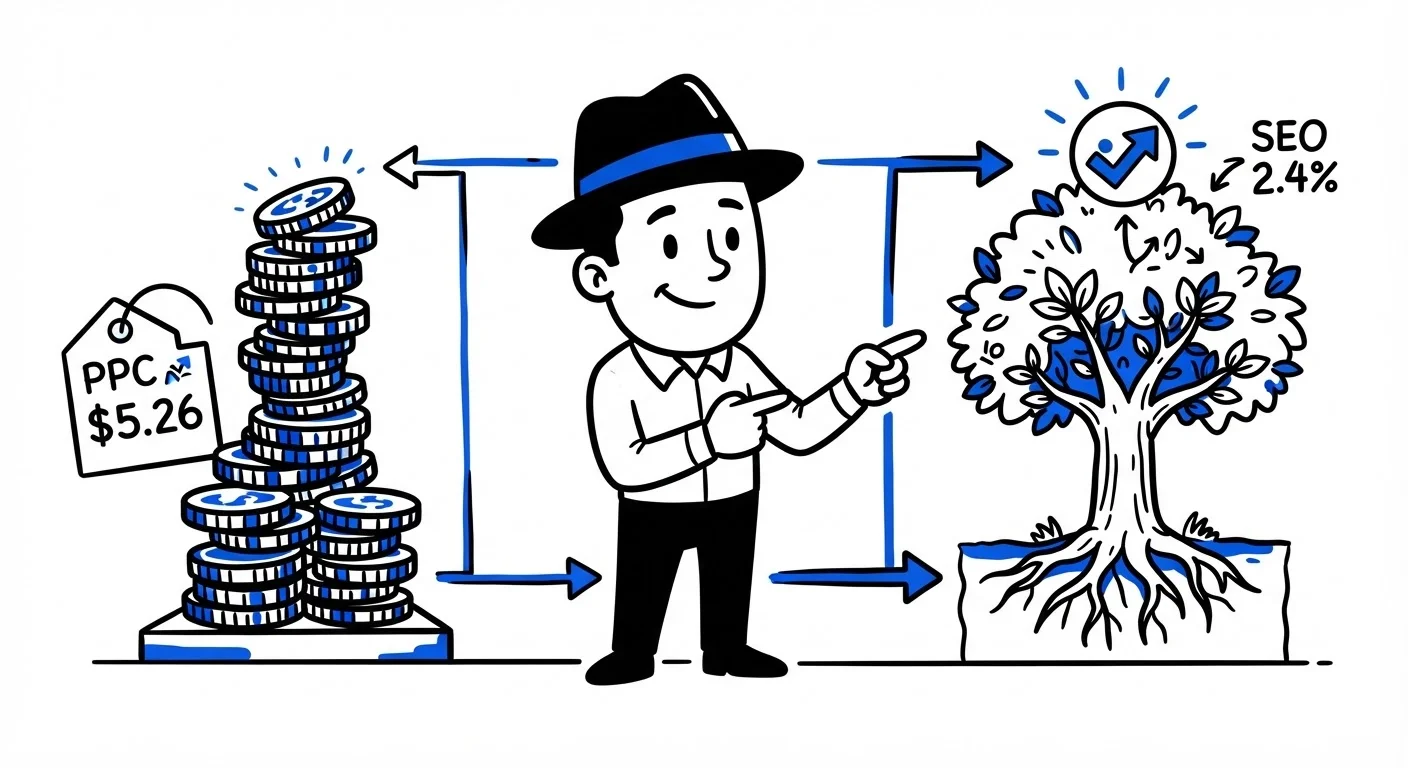
Average Google Ads CPC hit $5.26 in 2025, up 12.9% from the prior year, per Search Engine Land's reporting on WordStream's 16,000-campaign benchmark. Paid clicks got measurably pricier across nearly every vertical.
Conversion rates improved to 7.52% on average across the same WordStream campaign sample. Performance Max and automated bidding lift conversion quality even as CPCs climb, narrowing the multi-year cost-per-lead inflation seen across recent benchmark reports. Same spend, better outcomes, until you stop the auction.
SEO conversion rates averaged 2.4% across industries in 2025 versus 1.3% for PPC traffic, per First Page Sage's 124-client analysis. Organic converts higher, and the gap widens sharply in trust-heavy verticals like finance and healthcare.
In financial services, SEO converts at 7.3x the rate of PPC traffic, with legal services and medical devices sitting at 3.4x each. Paid ads feel generic in high-trust verticals, where users actively discount sponsored placements. Rankings signal authority. Organic wins the conversion math.
When SEO wins in 2026
SEO wins when you have six months of runway and a limited ad budget. SEO takes 6-12 months to rank for competitive commercial terms (SEMrush). Patient capital rewards patient channels with compounding returns.
SEO wins when informational queries dominate your target market. "How to" and "what is" searches convert better when traffic arrives from a trusted organic listing instead of a clearly labeled advertisement. Domain authority carries measurable weight with high-intent researchers across informational SERPs.
SEO wins in industries where paid ads feel cheap and low-trust. Financial services, legal, medical devices, and real estate all see organic conversions 3-7x higher than paid, since users discount generic "Ad" labels on expensive decisions. Trust compounds differently across these verticals.
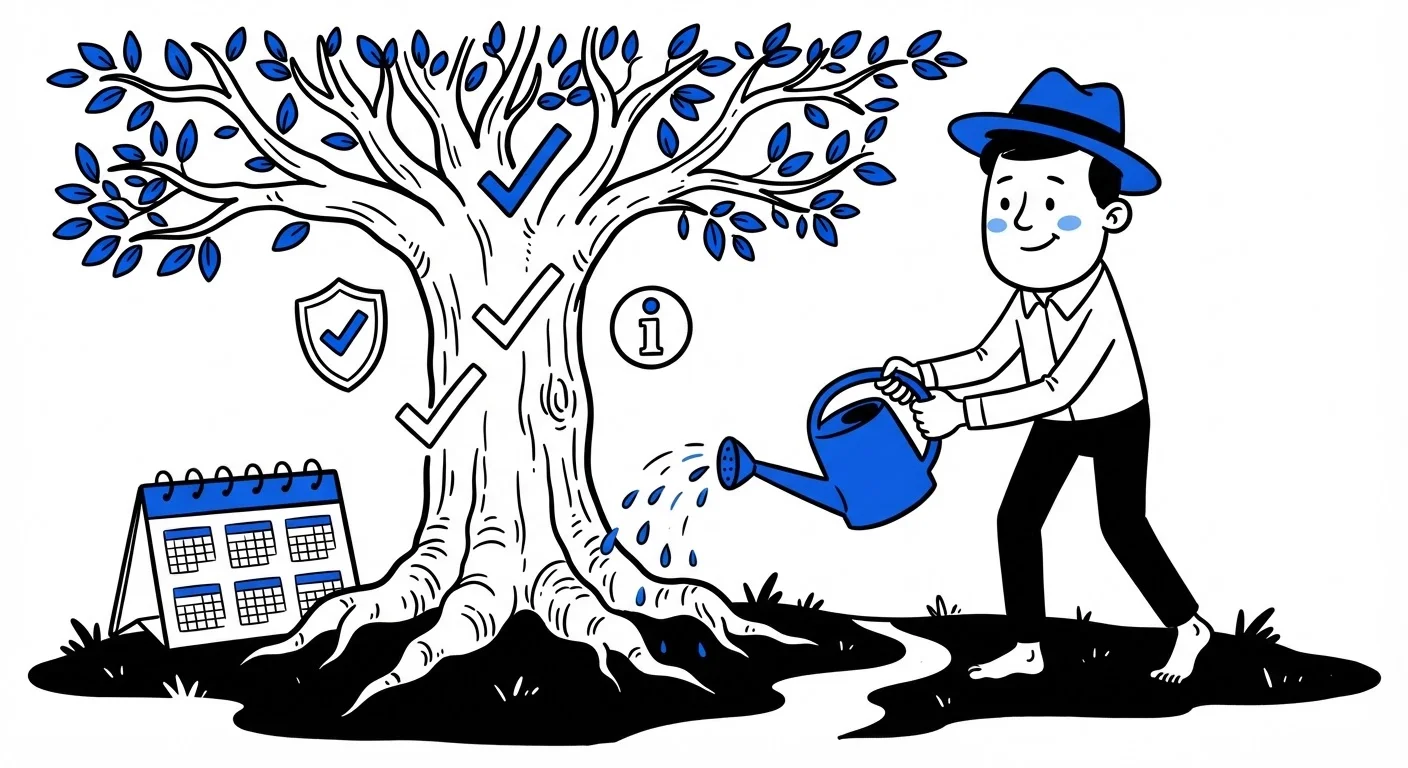
SEO wins when your content compounds across multiple ranking cycles. One well-ranked guide drives traffic for years at near-zero marginal cost, while paid campaigns stop the moment funding pauses. Compounding organic traffic outlasts ad budgets by orders of magnitude.
When SEM wins in 2026
SEM wins when you need traffic this week, not this quarter. Paid search ads launch and drive measurable clicks within hours of campaign setup and creative approval. SEO cannot match that startup speed for a new product, new market, or new domain.
SEM wins when you test commercial keywords before committing to long-form content production. Run a four-week PPC campaign on a target query, measure CPC and conversion data, then greenlight the corresponding SEO content based on real demand signal.
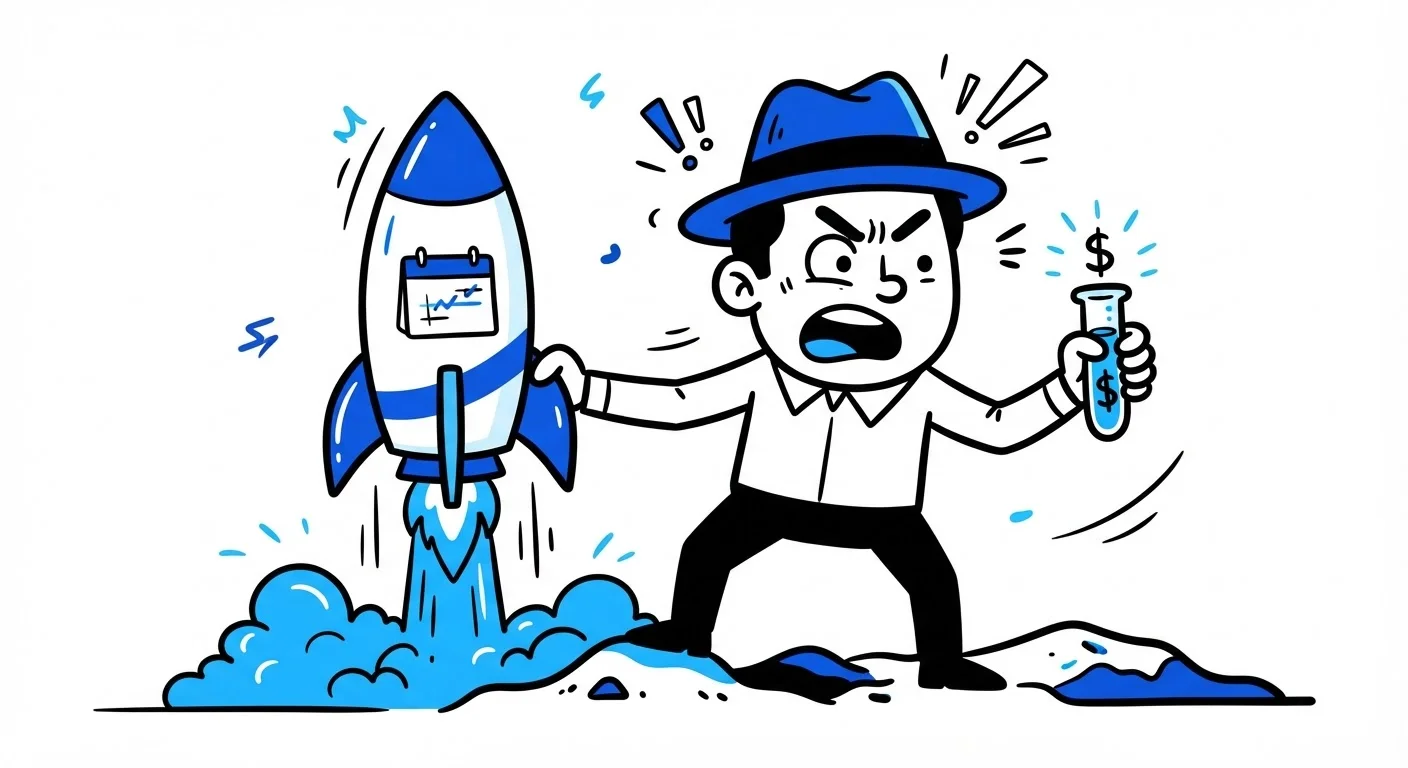
SEM wins when running time-sensitive promotions with fixed calendar windows. Black Friday campaigns, product launches, and event-driven sales run on paid infrastructure that delivers same-day visibility. Organic ranking cycles cannot match retail promotional calendars.
SEM wins in higher education, the one vertical where PPC outperforms SEO 1.7% to 1.4%, per First Page Sage. Prospective students respond to repeated paid exposure across multiple touchpoints. Few industries see this conversion flip.
End-of-quarter attribution audit
End of quarter, you run a 90-day attribution audit across SEO and SEM. You pull conversion data from both channels and tag every conversion with its full touchpoint sequence. Most companies should split 75% of search budget to SEO and 25% to PPC, per First Page Sage's blended recommendation.
You compare assisted conversions against last-click conversions. The gap tells you which channel's first-touch drove downstream value. SEMrush, First Page Sage, and Search Engine Land data on 2025-2026 blended attribution shows SEO assisting SEM in roughly 60% of multi-touch conversions.
You re-allocate next quarter's budget based on the audit. Push on the channels that over- or under-performed on measured contribution, not last-click. Refresh the math before any major reallocation.
Pick the channel that matches your runway. Six months and limited budget means SEO-first, with a small PPC test pool. Two weeks to a launch date means SEM-first, with the SEO content roadmap scheduled for month two.
Related Articles
Discover more insights about web development and digital marketing