What is SEO and Why Does It Matter in 2026
Learn what SEO is in 2026 — how AI Overviews changed search, what still works, how to debug ranking drops, and why the global SEO market crossed $83 billion.
Dilshad Akhtar
Last updated: 25 June 2026
4 min read
TL;DRAI summary
- SEO earns organic clicks through ranking work, content, and authority signals — same mechanics as the early search era
- Crawlers now traverse JavaScript hydration boundaries and execute client-side logic before indexing, making JavaScript SEO required
- AI Overviews triggered in 8% of all Google queries and over 35% of informational queries by January 2026
- AI Overviews correlate with a 58% lower click-through rate for the top-ranking page, though organic CTR rebounded 85% as publishers adapted
- Technical baseline (HTTPS, title tags, viewport meta) reached 91-99% adoption, shifting marginal returns up the stack to structured depth and entity associations
- The global SEO services market crossed $83 billion in 2026
SEO earns organic clicks through ranking work, content creation, and external link authority, all without paying the search engine per click. By 2026, the crawl audience has diversified across Googlebot, Bingbot, GPTBot, ClaudeBot, and others, and AI Overviews now reshape traffic flows, collapsing click-through rates on informational queries while rewarding structured depth and source diversity.
What SEO is in 2026
SEO earns organic clicks. You publish pages, mark them up for crawlers to parse, earn mentions from other sites that signal authority, and rank for matching queries, all without paying the search engine per click. Same mechanics as the early search era.
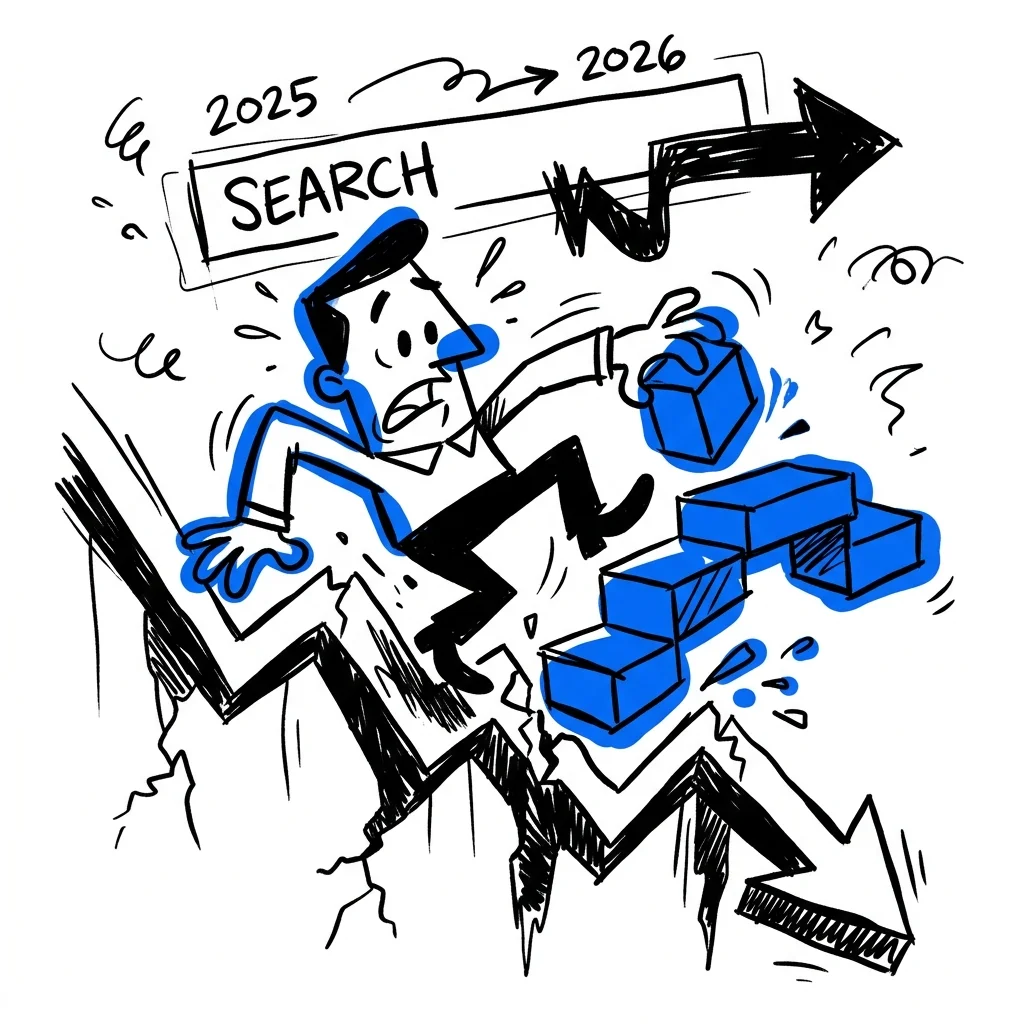
Crawling grew up. The desktop bot that fetched HTML a generation ago now traverses JavaScript hydration boundaries, fetches server-side rendered snapshots, indexes structured data, and renders pages in headless browsers to execute client-side logic before indexing (Google Search Central). JavaScript SEO is now required SEO.
Your crawl audience diversified. You now tune for Googlebot, Bingbot, GPTBot, ClaudeBot, and a long tail of vertical crawlers, each with its own rendering budget and its own tolerance for client-side rendering (Search Engine Land). A handful of bots a decade back. Nine crawlers in 2026.
The 2025-2026 ground shift
AI Overviews landed in the last 18 months and reached scale in 2025. By January 2026, they triggered in 8% of all Google queries and over 35% of informational queries, per Digital Applied's zero-click search statistics report. A recent addition. Already reshaping traffic flows.
AI Overviews collapse CTR. Ahrefs' February 2026 update found AI Overviews correlate with a 58% lower click-through rate for the top-ranking page. First position can halve overnight.
The decline is not monotonic. Seer Interactive's April 2026 update showed organic CTR on AIO-present queries rebounded 85% over two months as publishers adapted structured data and citation patterns. Your site must move with it.

What still works in 2026
The baseline hardened. HTTPS hit 91% adoption across the top million domains in 2025, title tags 99%, viewport meta 93%, per Search Engine Land's April 2026 audit. Harder to get wrong than right.
Marginal return shifted up the stack. Five years back, fixing 50 broken title tags could double organic traffic. Today it recovers 3-7% since the technical floor is high. The next 10% comes from structured depth, entity associations, and source diversity. Different skills, different tools.
Commercial queries still reward ranking. Organic CTR for the top result on queries without AI Overviews still averages 27-39%, per Ahrefs' 2026 search statistics. Informational needs richer structure.
The post-update debugging session

A Google algorithm drop lands. Within 24 hours, you open your crawl logs and look for queries that lost 20%+ impressions. You cross-reference with GSC's date-filtered view against the announcement timestamp. The drop tells you which pages the update touched and whether the loss is position-based or click-based.
You check the affected pages for pattern violations. Thin content, doorway signals, structured data gaps, expired schema markup. You fix what is fixable. You document the rest for the next quarterly review.
Note the gap. This post covers 2025 and 2026 data from four sources. Ahrefs, Seer Interactive, Search Engine Land, Digital Applied. Five other primary sources had no public 2025 numbers on AI Overview CTR impact at the time of writing.
The global SEO services market crossed $83 billion in 2026, per Yahoo Finance industry estimates. The work compounds after each update.
Related Articles
Discover more insights about web development and digital marketing