The Shift to AI-First Search: SGE and AI Overviews
How Google's Search Generative Experience evolved into AI Overviews in 18 months, what AI Overviews do to your organic traffic, how AI Mode changes the game, and how to audit your AI Overview visibility.
Dilshad Akhtar
Last updated: 11 July 2026
5 min read
TL;DRAI summary
- AI Overviews triggered in 8% of all Google queries and over 35% of informational queries globally by January 2026
- AI Overviews correlate with a 58% lower CTR for the top-ranking page
- Cited sources within AI Overviews receive roughly 1/3 of the lost CTR as a recovery
- Google's AI Mode bypasses the traditional SERP entirely — users get synthesized answers without a 10-blue-links page
- Two ranking systems now coexist: traditional rank tracking and AI citation inclusion, requiring different inputs
Google rebranded SGE as AI Overviews and shipped it to all US users by mid-2025. By January 2026, AI Overviews triggered in 8% of all Google queries, and AI Mode — a chat-style interface bypassing the traditional SERP entirely — grew 4x month-over-month between March and May 2026.
From SGE to AI Overviews in 18 months
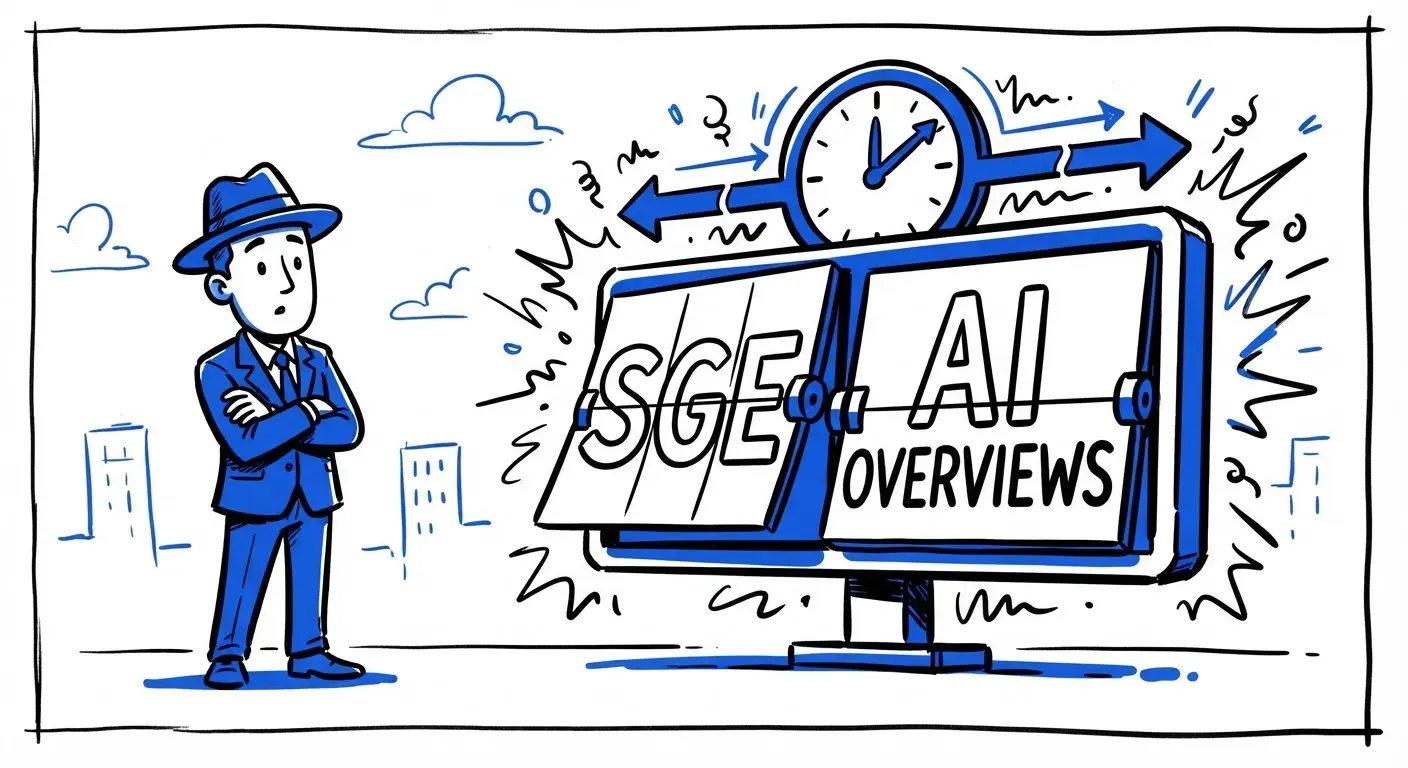
Google launched Search Generative Experience as a Search Labs experiment during the early generative era. SGE generated AI summaries above traditional blue-link results for opted-in users only. The architecture was opt-in. The intent was exploratory.
Google rebranded SGE as AI Overviews and shipped it to all US English users by mid-2025, per SERanking's SGE-to-AIO timeline. The architecture stayed similar. The opt-in flag flipped to on by default for everyone.
The expansion accelerated through 2025. By January 2026, AI Overviews triggered in 8% of all Google queries and 35%+ of informational queries globally. The rollout stopped being experimental.
Google declared at I/O 2026 that "Google Search is AI Search" per Reddit coverage of the I/O keynote. The product repositioning was official. Traditional SERP is now a sub-feature of AI Search, not the other way around.
What AI Overviews do to your traffic
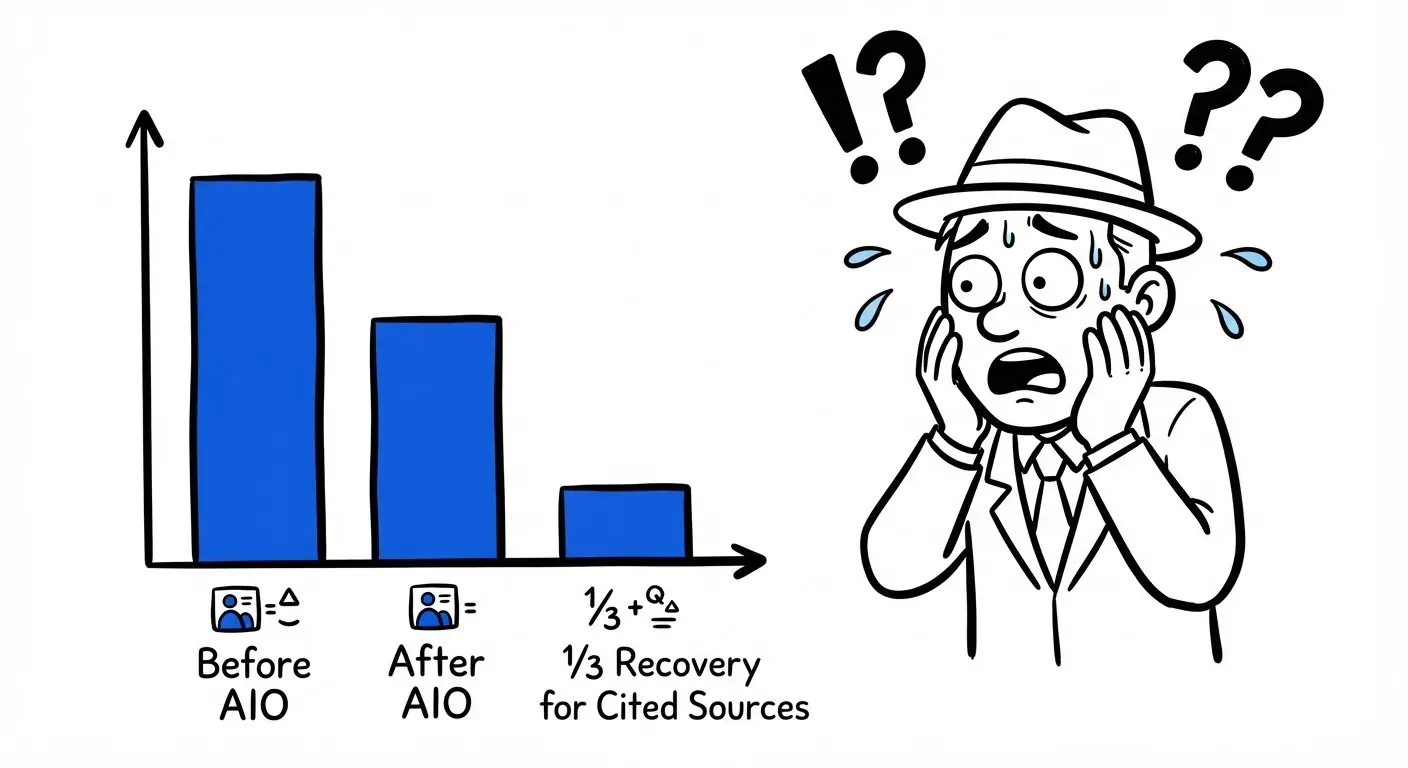
AI Overviews collapse organic CTR for queries where they appear. Ahrefs' February 2026 study found AI Overviews correlate with a 58% lower CTR for the top-ranking page. The page still ranks. The page no longer earns clicks.
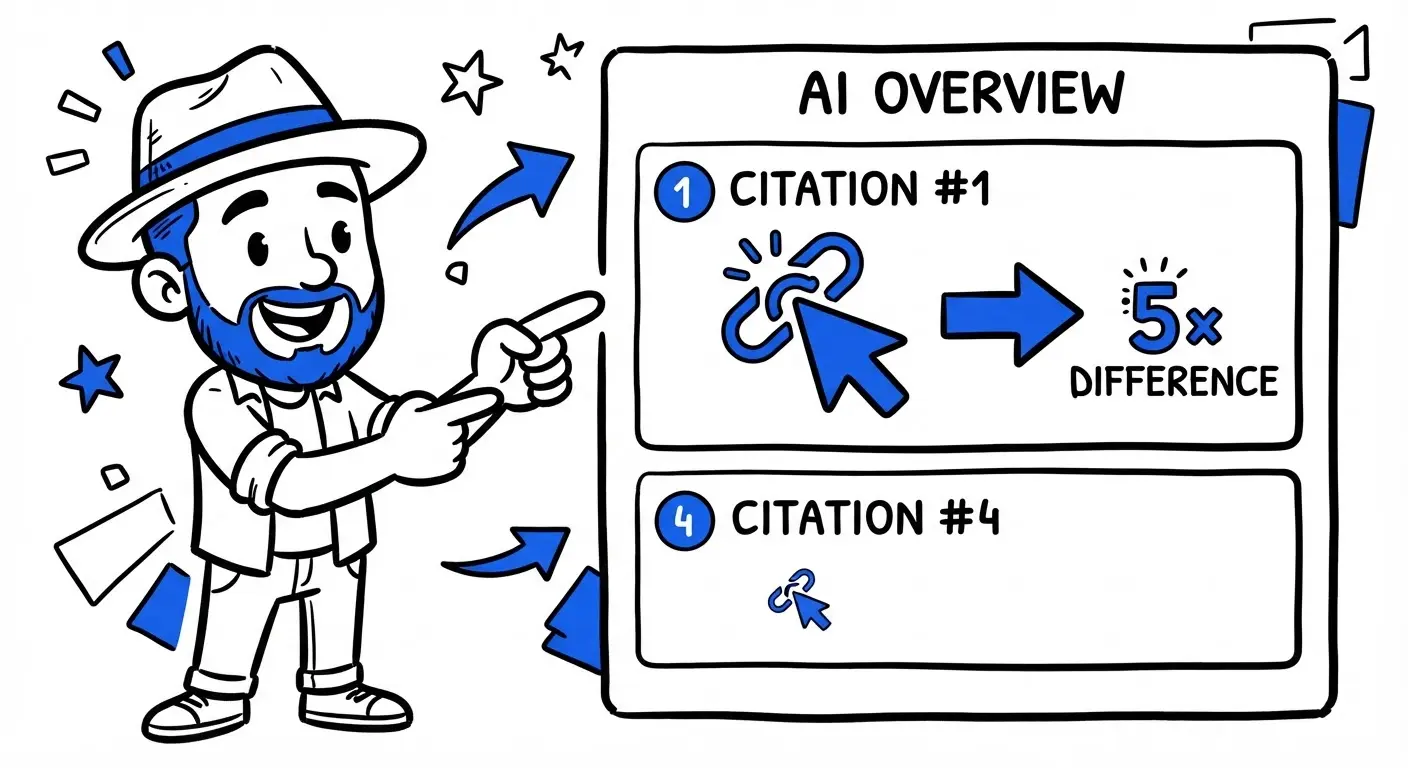
Per Search Forged's AEO encyclopedia, the cited sources within AI Overviews receive roughly 1/3 of the lost CTR as a recovery. Citation position matters. Cited source #1 inside the AIO captures roughly 5x the click share of cited source #4.
The traffic pattern that emerges is bimodal. Queries without AI Overviews deliver stable organic traffic. Queries with AI Overviews deliver 30-50% less organic traffic plus 10-15% net-new traffic to cited sources. The split depends on citation rank.
AI Mode and the deeper change
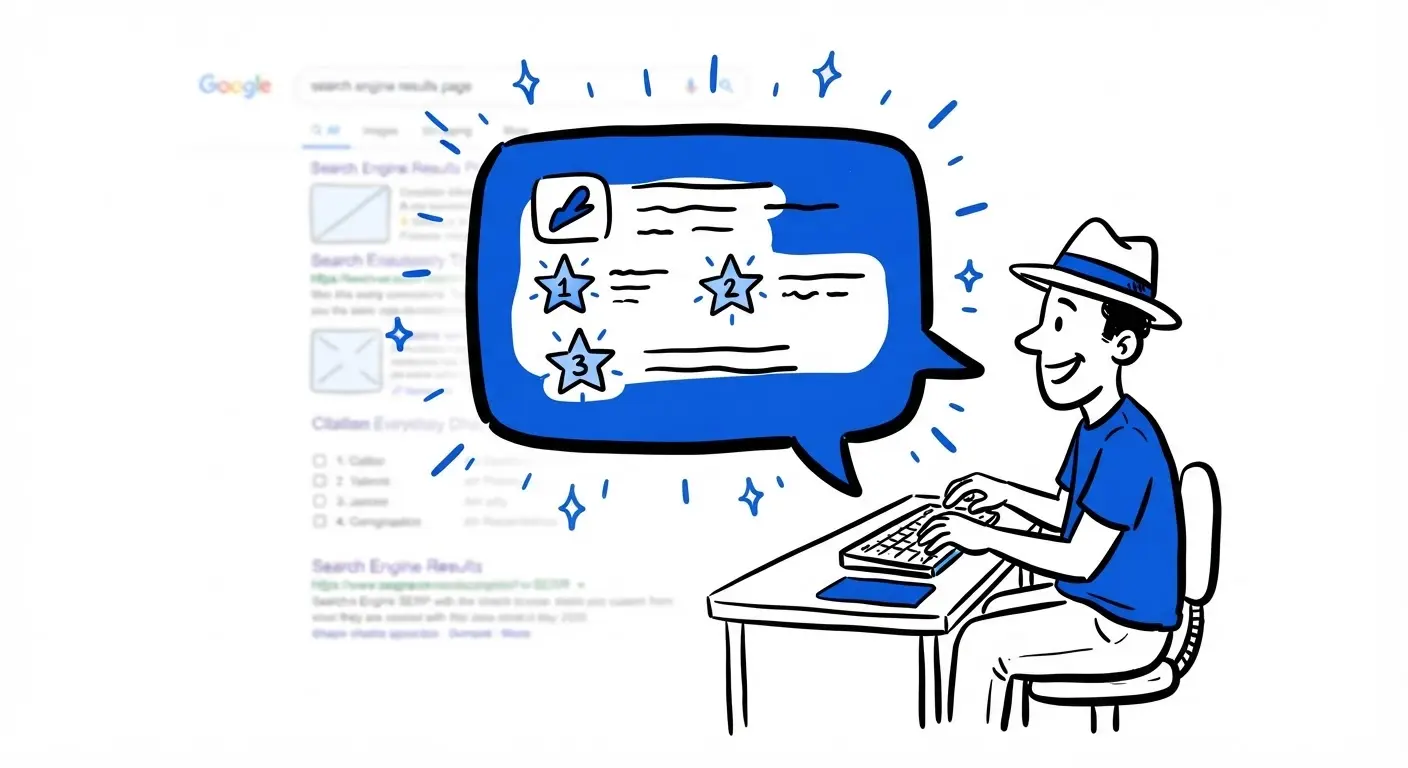
Google rolled out AI Mode at I/O 2026, a chat-style interface that bypasses the traditional SERP entirely. Users ask multi-turn questions. Google returns synthesized answers with citations, but no traditional 10-blue-links page exists to rank on.
Time's May 2026 coverage of Google's AI Search shift notes that AI Mode queries grew 4x month-over-month between March and May 2026. The chat-style interface is now a meaningful share of informational search volume.
The strategic implication is structural. A site tuned for rank positions on a SERP now also needs to qualify for citation inclusion in an AI response. Two ranking systems. Different inputs. Both matter.
The AI Overview visibility check
You open GSC and filter queries to those triggering AI Overviews. The filter shows your average position on those queries versus queries without AIO. Below position 4 on AIO queries, you are likely uncited. Above position 4, you have a citation candidate.
You check your citation rate directly via the search-for-cited-sources tool. You enter your top 20 informational queries and record whether your URL appears in the AIO citation block for each. Below 30% citation rate, your content lacks entity associations or structured data the AIO can extract.
This post covers 2025 and 2026 data from four primary sources: SERanking, Ahrefs, Search Forged, Time. Google has not published official AI Overview ranking documentation. Cite rate measurements are third-party estimates. Replication required.
The shift to AI-first search is not coming. It shipped. Audit monthly, not annually.
Related Articles
Discover more insights about web development and digital marketing