When to Invest in SEO vs Paid Search: A 2026 Decision Framework
SEO produces a $31 lead on average. Paid search produces the same lead for $181. The break-even window and runway length decide which channel to fund.
Dilshad Akhtar
Last updated: 11 July 2026
5 min read
TL;DRAI summary
- Organic lead costs $31 on average vs $181 for paid search across 14 industries
- SEO achieves positive ROI between months 7 and 13; paid achieves it on day 1
- SEO on a $15,000/month spend produces $112,000 in pipeline by month 18 vs $48,000 for paid
- Runway under 6 months: 100% paid. Runway over 18 months: 80% SEO
- Score every keyword cluster on runway length, intent depth, conversion rate, and competition density
SEO and paid search expenditure different money at scale. The gap sits at the lead level. Organic search produced a $31 lead on average across 14 industries in 2025. Paid search produced the same lead for $181.
The expenditure gap that decides most of it
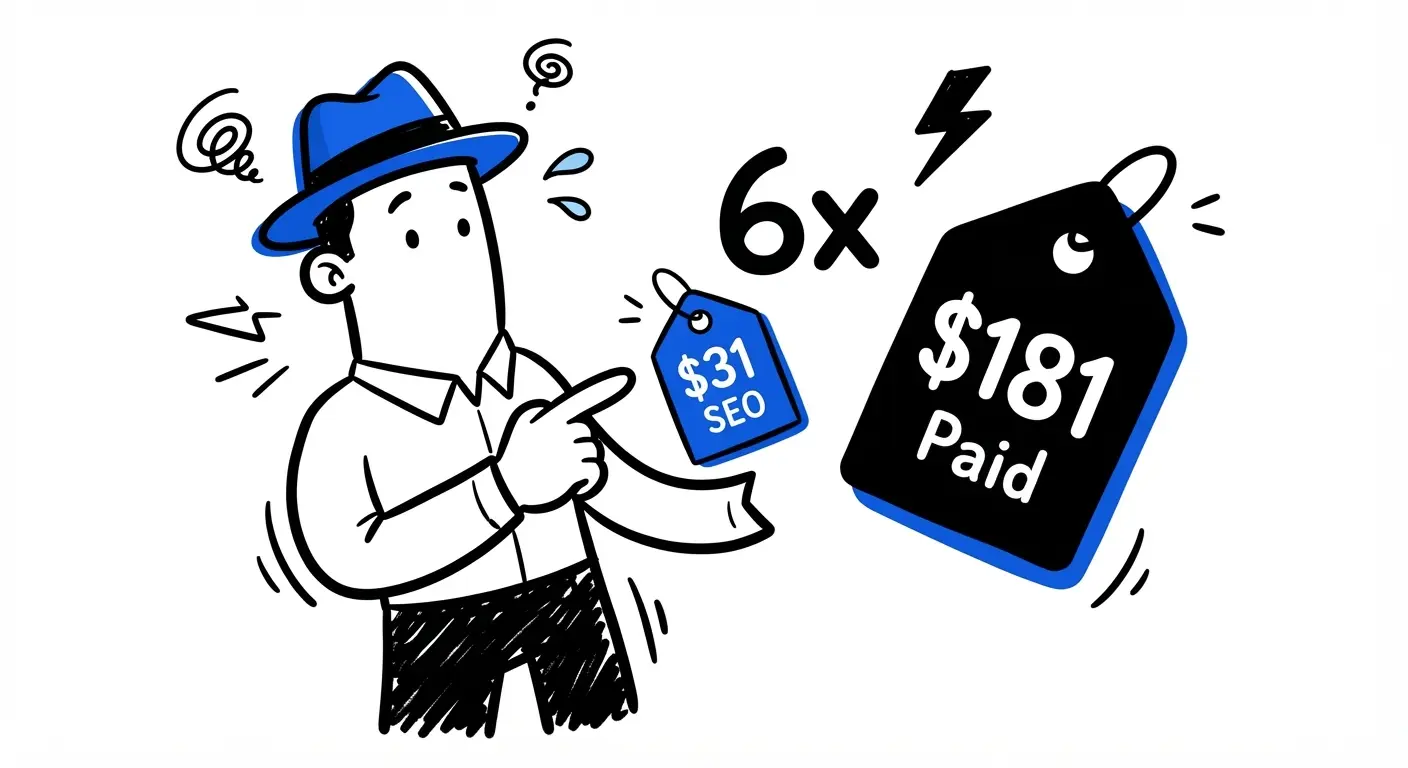
Organic acquisition compounds in ways paid search cannot replicate. A page ranking in position three today still drives traffic in month 24 with no incremental spend attached, while a paused paid campaign returns zero clicks the next morning. The asymmetry drives every multi-year budget you write.
The break-even window matters more than the expenditure per click. First Page Sage's 2026 SEO ROI study tracked 2,300 campaigns across SaaS, ecommerce, and financial services. SEO achieved positive ROI between months 7 and 13. Paid search achieves it on day 1 but bleeds cash every month after.
When paid search wins the sprint
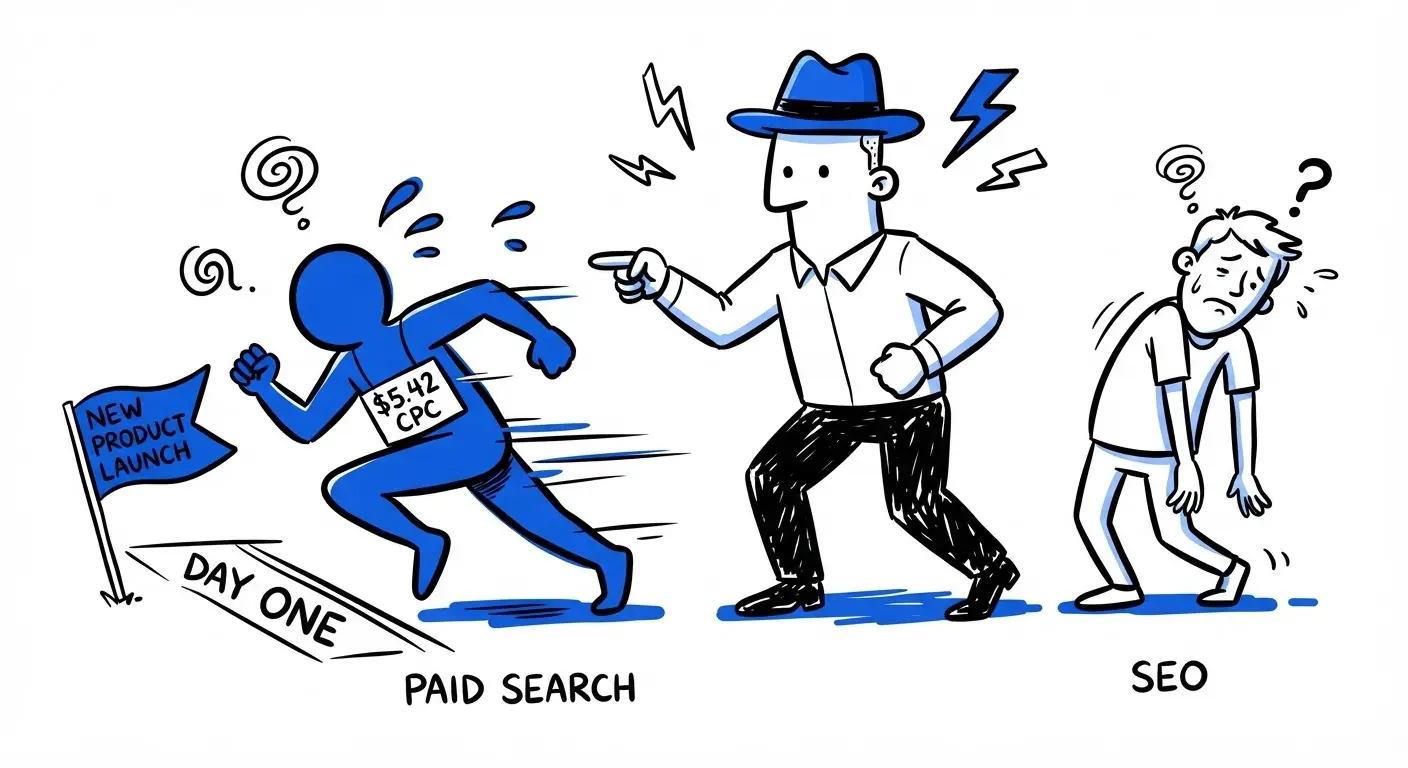
Paid search earns clicks on day one. A new Google Ads campaign produces impressions within the first hour. The iteration loop executes short: you change copy, bids, and targeting, then read the auction data the next morning and deliver another variant.
New product launches execute on paid media since organic authority has not accumulated yet. No inbound links, no position history, no domain rating carryover from prior campaigns. Buying clicks is the only path to first-cycle revenue from cold traffic.
High-intent commercial queries with verified margin go to paid first. The 2025-2026 Google Ads benchmark recorded a $5.42 average expenditure per click, per Search Engine Journal's 2026 paid search study. A 4% conversion rate on $260 average order value produces a workable acquisition expenditure.
Informational queries do not justify paid spend under that math. The 2025 Promodo PPC benchmark recorded 6.5% CTR for search ads and 2.9% for display. The post-click intent sits below the MQL threshold across most B2B categories.
When SEO compounds past paid
Category-defining queries favor organic placement in the long run. The terms your buyer types when comparing solutions, pricing, and vendor shortlists convert at 2-5x the rate of paid clicks, per First Page Sage's 2026 industry data. The buyer did the research first and arrives with commercial intent already loaded.
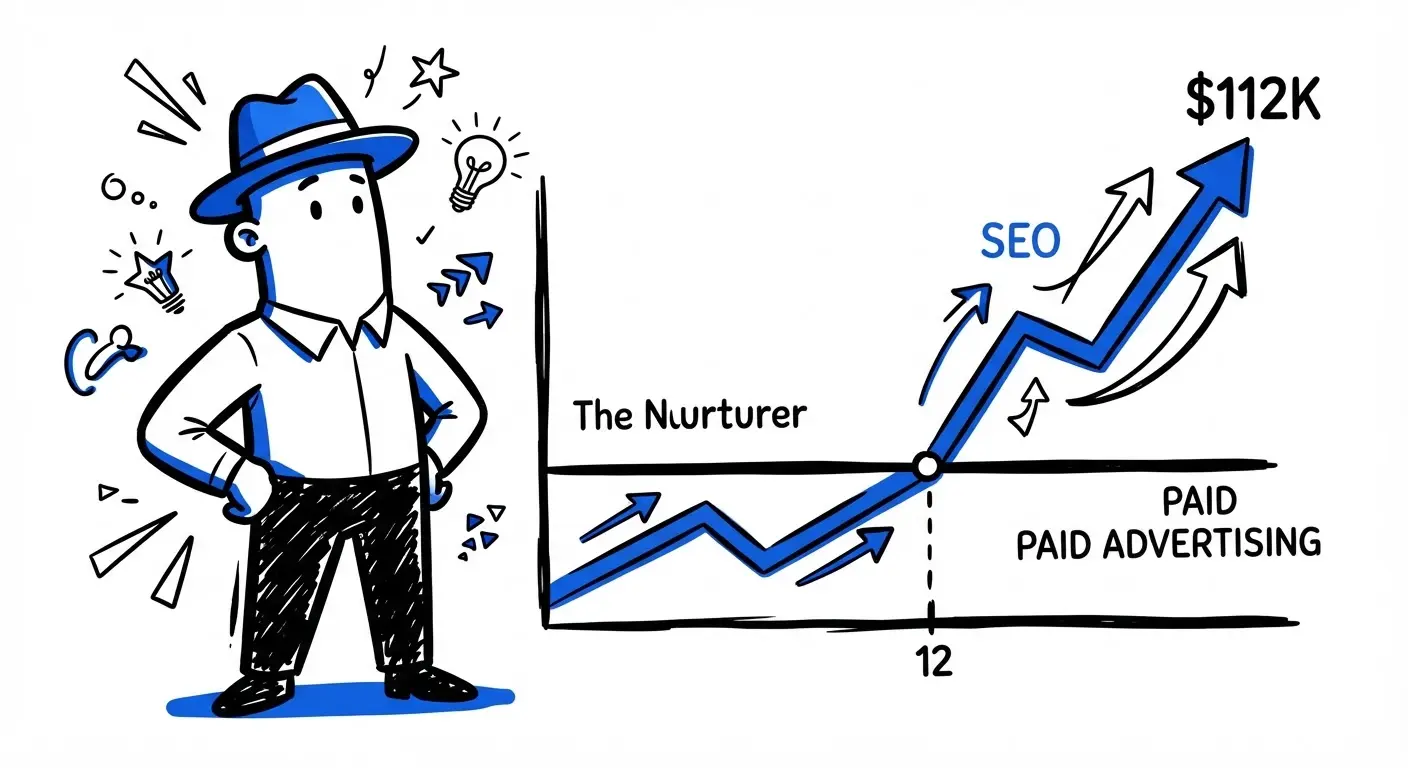
Fixed monthly budgets favor SEO economics across multi-year horizons. A $15,000/month spend split 50/50 between SEO retainers and paid search produces roughly $48,000 in attributable paid revenue at month 12, per Improvado's 2026 modeling. The same spend on SEO alone produces $112,000 in organic pipeline by month 18.
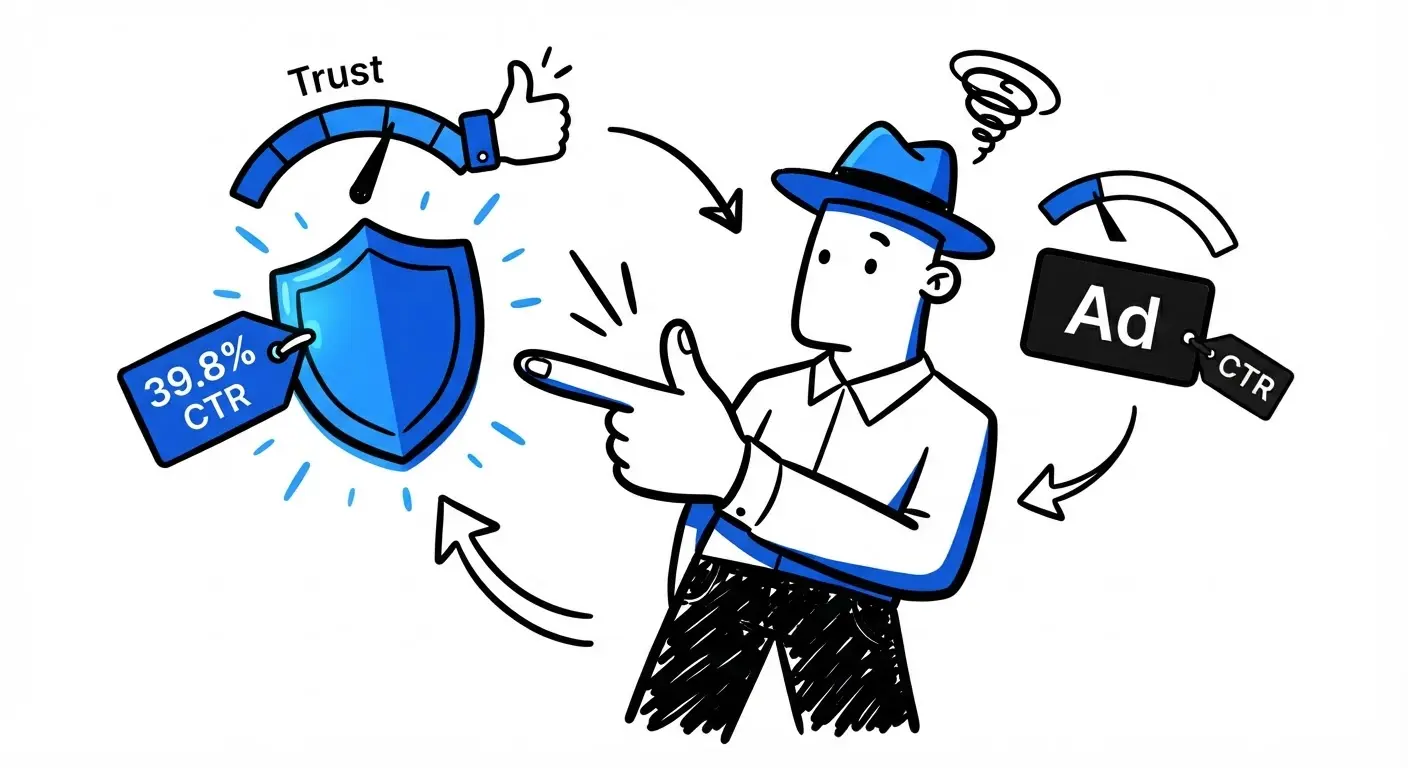 Brand integrity favors organic results across competitive query categories. The organic position carries editorial weight that paid placement erodes. Users in 2025 click the first organic result 39.8% of the time on queries without AI Overviews, per Ahrefs' 2026 search statistics. A paid position 1 captures less than half that rate across monitored query categories.
Wide keyword universes favor SEO economics at scale. Paid search scales linearly with query volume. A 5,000-keyword paid program at $5.26 average CPC costs $26,300/month. The same 5,000 keywords targeted through content and links costs $4,000-8,000/month after the first quarter.
The runway scoring
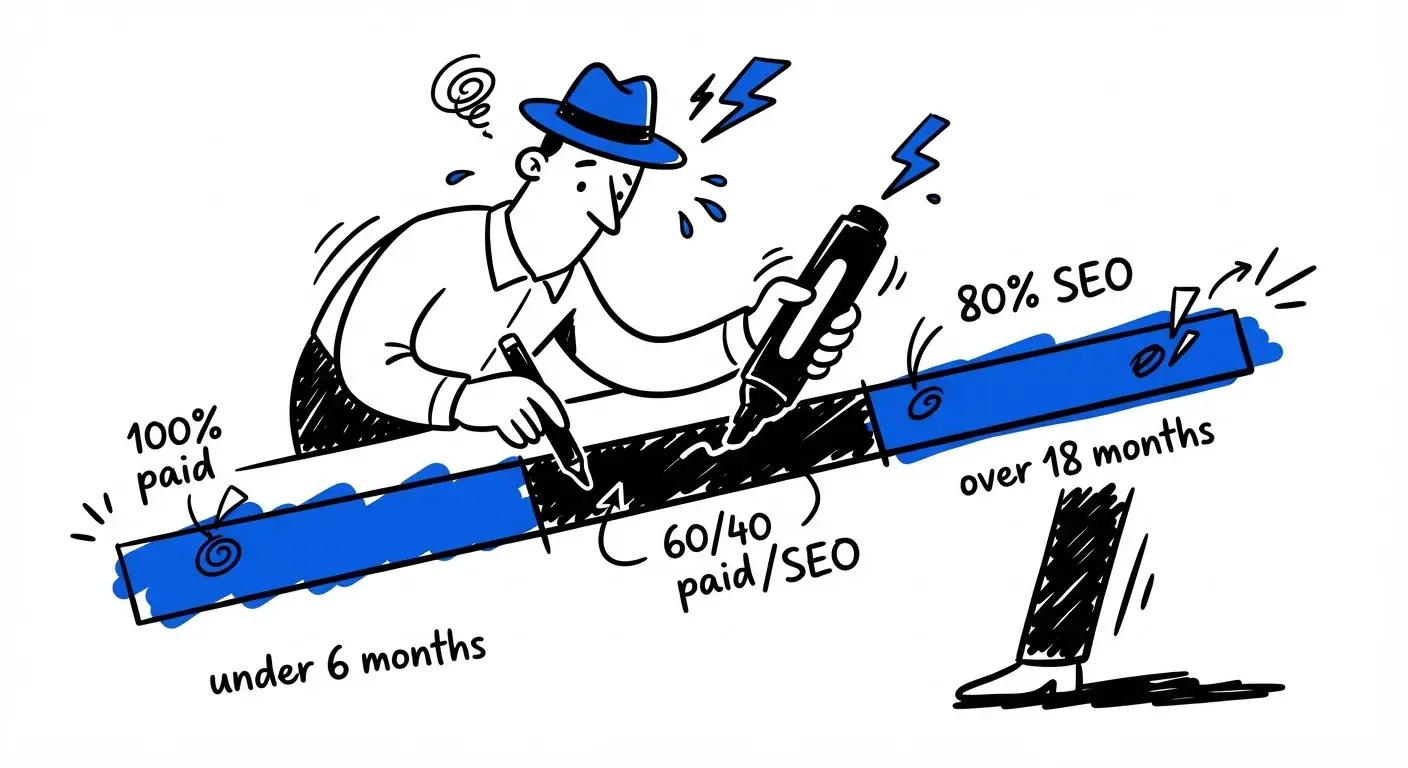
End of quarter arrives, and you sit down with three datasets: the attribution report, the GSC query file, and the Google Ads spend export. You score every keyword cluster on four axes including runway length, intent depth, conversion rate, and competition density.
The math is blunt across the four axes. Runway under 6 months goes 100% to paid. Runway 6-18 months splits 60/40 paid to SEO. Runway over 18 months goes 80% SEO. Runway infinite goes full content.
Most teams overfund the short runway in practice, and the cost shows up 12 months in when the paid budget eats the same revenue twice. SEO investment in the same window would have produced the clicks for free. Pick by runway, not by channel preference.
Note the gap. This post synthesizes 2025-2026 data from five sources: SeoProfy, First Page Sage, Search Engine Journal, Promodo, and Improvado. Two paid search attribution platforms had no public 2025 CPA benchmarks at writing. Treat single-source figures as ranges, not gospel.
The framework executes on every keyword cluster in your GSC export consistently. The numbers stay consistent across quarters, and the work delivers on schedule across the planning cycle.
Related Articles
Discover more insights about web development and digital marketing